
How to Protect Your Bike from Theft in London: 8 Practical Tips
Cycling is a convenient way to get around London, whether you are commuting to work, visiting friends or exploring different parts of the city. However, leaving your bicycle unattended can come with a risk of theft, particularly when it is parked in a busy public area for an extended period.
A good lock is essential, but protecting your bike involves more than simply securing it to a railing. Choosing the right parking location, locking the frame correctly and keeping a record of your bicycle’s details can all make a difference.
If you cycle regularly around Camden or other parts of London, these eight practical tips can help you reduce the risk of bike theft and feel more confident whenever you leave your bicycle unattended.
1. Invest in a Good-Quality Bike Lock
One of the most effective ways to protect your bicycle is to use a reliable lock. Different locks offer different levels of security, so it is worth considering where you normally park your bike and how long you leave it unattended.
D-locks, also known as U-locks, are popular because their rigid construction can make them difficult to attack with basic tools. Heavy-duty chain locks can also provide strong protection, depending on their construction and security rating.
Cable locks are lightweight and convenient, but many provide limited protection against determined thieves. They are better suited to securing accessories or serving as a secondary deterrent rather than being the only lock protecting a valuable bicycle.
When choosing a lock, look for an independent security rating from a recognised scheme, such as Sold Secure. Select a suitable rating for your bicycle’s value and the places where you expect to park it.
Spending a little more on a dependable lock can be worthwhile when compared with the cost and inconvenience of replacing a stolen bike.
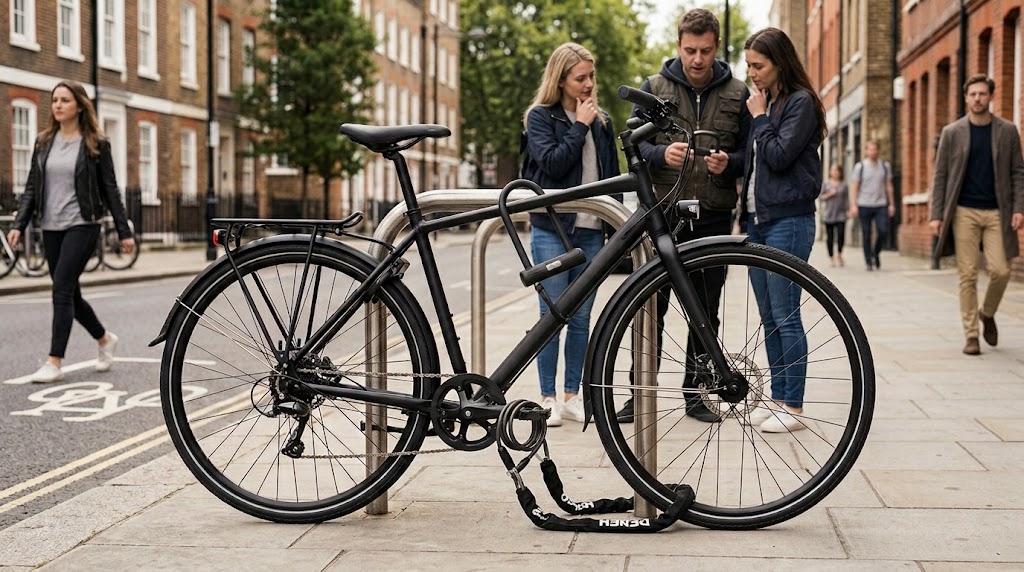
2. Lock Your Bike to a Secure, Fixed Object
Even an expensive lock may offer limited protection if your bicycle is attached to something that can easily be removed, lifted or broken.
Whenever possible, use a designated cycle stand that is firmly secured to the ground. Check that the stand is not loose, damaged or easy to dismantle.
Avoid locking your bicycle to temporary fencing, weak railings or objects that a thief could lift the bike over. Make sure the lock cannot simply be slipped off the object once the bicycle has been moved.
It is also important to check the frame of the bicycle after locking it. Your lock should secure the frame, rather than just the front wheel, which can often be removed separately.
If you regularly park near work, a station or local shops, take a moment to identify secure cycle stands before you need them. Knowing where to park can make your daily journey more convenient.
3. Secure the Frame and Wheels Properly
Locking your bicycle correctly is just as important as choosing a suitable lock.
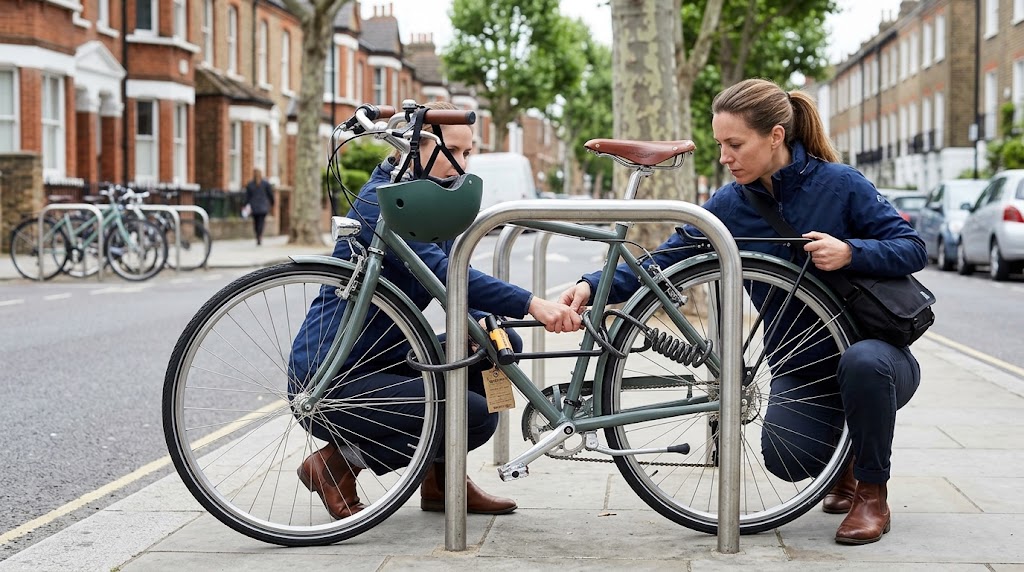
Whenever possible, pass your main lock through the bicycle frame and around a secure cycle stand. If the lock allows enough space, include the rear wheel as well, as this can make it harder for someone to remove valuable components.
The front wheel can be secured with a second lock or a suitable security device. Quick-release wheels and saddles deserve particular attention because they can be removed without specialist tools.
If you use a D-lock, position it so that there is as little empty space inside the lock as reasonably possible. This can make it more difficult for a thief to insert tools and apply force.
Avoid leaving the lock resting on the ground if you can position it more securely. Follow the manufacturer’s instructions for your particular lock and make sure it closes properly before walking away.
A few extra seconds spent checking your locking technique can help prevent an opportunistic theft.
4. Choose Your Parking Location Carefully
Where you leave your bicycle can influence how vulnerable it is to theft. A quiet, poorly lit corner may offer a thief more time to work without being noticed.
Whenever possible, choose a designated cycle parking area in a visible, well-used location. Look for secure stands near entrances, staffed buildings or other places where there is regular activity.
Good lighting can be particularly helpful during the darker months, when many London commuters travel before sunrise or after sunset.
However, a busy location does not guarantee safety. A thief may still attempt to steal a bicycle in public, so always use an appropriate lock even when parking for a short period.
If your workplace, apartment building or accommodation offers secure indoor cycle storage, consider using it. Access-controlled storage can provide an additional layer of protection, although you should still secure the bicycle where possible.
For regular journeys around Camden, planning where you will leave your bike can be just as important as planning the route itself.
5. Register Your Bike and Record Its Details
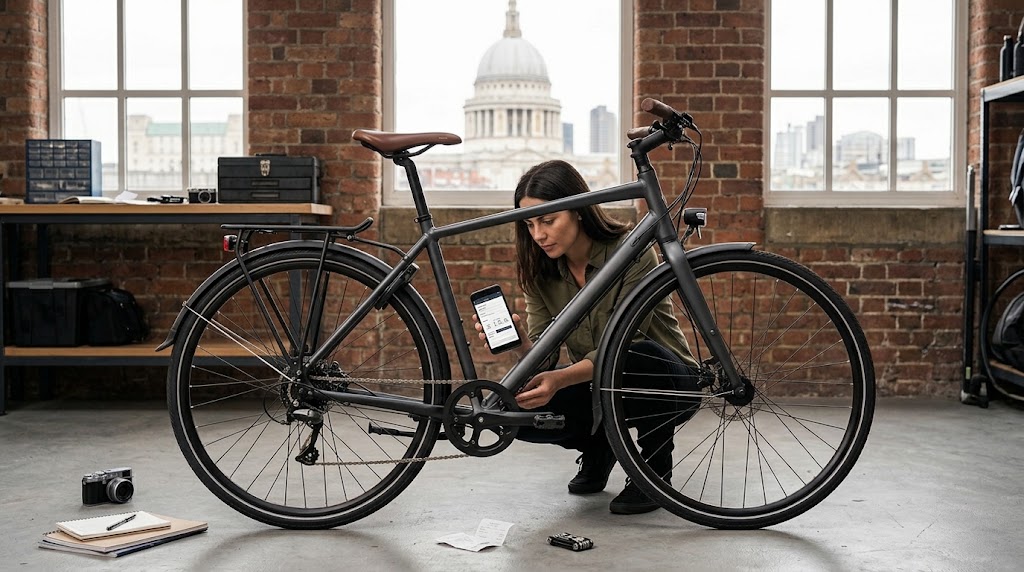
If your bicycle is stolen, having accurate information ready can help when reporting the incident and identifying the bike if it is recovered.
Start by recording the frame number, which is usually stamped or engraved into the frame. Its location varies by bicycle, but it is commonly found underneath the bottom bracket, where the pedals connect to the frame.
Keep a note of the make, model, colour and any distinctive features. It is also sensible to photograph the bicycle from several angles, including close-ups of unusual markings, accessories or damage.
Consider registering the bicycle with a reputable cycle registration service. Some services allow owners to record their details and may help make it easier to identify a recovered bike.
Keep your purchase receipt and any relevant documentation in a safe place. If you buy a second-hand bicycle, ask the seller for proof of ownership where available.
These simple steps take very little time but can be valuable if you ever need to report your bicycle missing.
6. Remove Accessories and Other Valuables
A securely locked bicycle can still lose valuable components if accessories are left attached.
Lights, pumps, bags, removable displays and other accessories may be attractive targets for opportunistic thieves. Whenever practical, take removable items with you rather than leaving them on the bike.
Pay particular attention to quick-release saddles and wheels. If your bicycle has quick-release components, consider suitable security skewers or other compatible anti-theft devices.
If you own an electric bike, take the battery and removable display with you when the manufacturer’s instructions allow it. Keep any keys or unlocking devices secure as well.
Avoid leaving bags containing personal belongings attached to the handlebars or luggage rack, even if the bicycle itself is locked securely.
Removing accessories will not prevent every theft, but it can reduce the number of valuable items left unattended and make your bicycle less attractive to opportunistic thieves.
7. Make Your Bike Easy to Identify
A bicycle with distinctive, documented features may be easier to recognise if it is recovered after a theft.
Take clear photographs of the frame, handlebars, wheels and any unique details. Record the frame number and update your information if you replace major components or make noticeable changes.
You can also consider a suitable security marking system, provided it is compatible with the frame material and does not damage the bicycle.
Avoid relying on stickers or removable accessories alone, as these can be taken off or changed. Your frame number, photographs and purchase records provide more useful evidence of the bicycle’s identity.
If you buy a second-hand bike, check its frame number through an appropriate stolen-bike database or registration service where available. Be cautious if the number appears to have been removed or altered, or if the seller cannot provide a convincing explanation of ownership.
If you suspect a bicycle is stolen, do not confront the seller or attempt to recover it yourself. Report your concerns to the relevant authorities.
8. Develop a Consistent Bike-Security Routine
Good security habits are easier to maintain when you follow the same routine every time you park.
Before leaving your bicycle, check that the frame is secured to a fixed object, the lock is properly closed and the wheels are protected. Remove valuables and make sure the bike is not blocking a pavement or creating an obstruction.
Avoid leaving your bicycle in the same vulnerable location for long periods, particularly overnight. If you regularly commute, consider using secure storage at home and work wherever available.
It is also worth checking your lock occasionally for damage, corrosion or a faulty mechanism. A lock that no longer closes reliably should be repaired or replaced.
For expensive bicycles, check whether your home insurance covers cycle theft away from the property or whether separate bicycle insurance would be appropriate. Read the policy carefully, as insurers may specify particular lock standards, security ratings or parking requirements.
Most importantly, make these checks part of every ride rather than waiting until you are parking somewhere unfamiliar.
What Should You Do If Your Bike Is Stolen?
Despite taking precautions, theft can still happen. If your bicycle goes missing, report the incident to the police and provide its frame number, photographs, description and any available evidence.
Keep your crime reference number and notify your insurer if you have cover. You can also check relevant bicycle registration services and local recovery channels for updates.
If you find a listing that appears to show your stolen bicycle, save the listing details and report your concerns to the police. Avoid arranging a confrontation with the seller or putting yourself at risk.
Having your bicycle’s details recorded in advance can make these steps much easier during an already stressful situation.
Protect Your Bike Before Your Next London Ride
Keeping your bicycle secure does not have to be complicated. Using a suitable lock, choosing a secure parking location, protecting removable components and recording your bike’s details can all help reduce the risk of theft. Consistent habits are particularly important when cycling regularly through busy areas of London.
Whether you need advice on suitable locks, everyday cycling accessories or maintaining your bicycle, Camden Cycles can help you find practical options for your cycling needs. Taking a few simple precautions before leaving your bike unattended can help you protect your investment and enjoy greater peace of mind on your next journey.