
How to Keep Your Bike Running Smoothly During a Wet London Winter
Cycling through London during winter can be challenging. Rain, muddy roads, cold temperatures and dirty puddles can quickly affect your bicycle, especially if you use it every day to get to work, college or the shops. A bike that runs perfectly during the summer may start developing problems when the weather turns wet and cold. The chain might become noisy, the brakes may feel less effective, and the gears might not change as smoothly as they used to. Fortunately, you do not need expensive equipment or advanced mechanical skills to keep your bicycle in good condition. A few simple maintenance habits can help prevent unnecessary wear, reduce the risk of breakdowns and make winter cycling more comfortable. Here is how to look after your bike during a wet London winter.
1. Clean Your Bike After Wet Rides
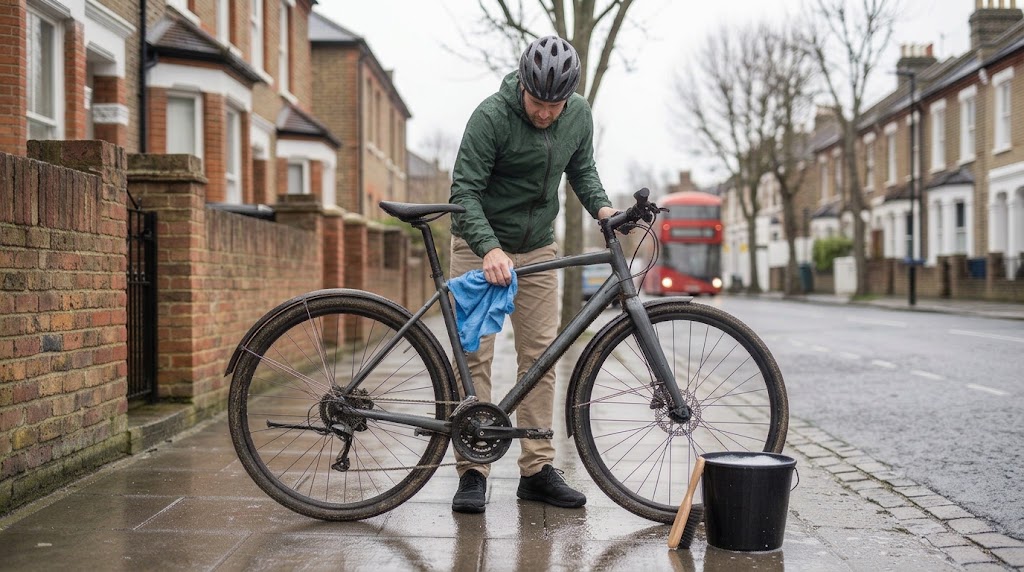
One of the easiest ways to protect your bicycle during winter is to clean it regularly. London’s roads collect dirt, grit and mud, which can stick to your tyres, frame, chain and gears when the weather is wet. If this dirt remains on your bike, it can gradually wear down moving parts and make maintenance more difficult.
You do not need to wash your bicycle thoroughly after every short journey. For everyday use, a quick clean with a damp cloth can remove much of the dirt from the frame, wheels and other accessible areas. Pay particular attention to the chain, cassette and derailleur, where grime tends to build up.
Use a suitable bicycle cleaner or mild soapy water when necessary, along with a soft brush for stubborn dirt. Avoid directing a high-pressure water jet at bearings, hubs or the bottom bracket, as excessive water pressure can force moisture into components that should remain protected.
After cleaning, dry your bike with a clean cloth, especially around the chain and other metal components. Regular cleaning takes only a few minutes and can help prevent bigger problems later.
2. Keep Your Bike Chain Clean and Lubricated
Your bike chain works hard during every ride, but winter weather can make its job more difficult. Water can wash away lubricant, while road grit and dirt can collect between the chain links. If you continue riding with a dirty or poorly lubricated chain, it can wear out more quickly and may begin to make clicking, grinding or squeaking noises.
Start by wiping the chain with a clean cloth to remove surface dirt. If it is heavily contaminated, use a bicycle-specific degreaser according to the product instructions. Allow the chain to dry before applying fresh lubricant.
For wet winter conditions, a suitable wet-weather bicycle chain lubricant can provide longer-lasting protection against moisture. Apply a small amount to the chain links while slowly turning the pedals backwards, following the lubricant manufacturer’s instructions. Wipe away excess lubricant from the outside of the chain because a thick coating can attract more dirt.
Try to check your chain regularly, particularly if you commute in the rain several times a week. If it becomes noisy soon after lubrication or the gears start behaving strangely, it may need a more thorough clean or a mechanical inspection.
3. Check Your Brakes More Frequently
Good brakes are essential throughout the year, but they deserve extra attention during a wet London winter. Rainwater, mud and road grime can affect braking performance, while grit can increase wear on brake pads and rims or disc rotors.
Before setting off, check that both brakes respond properly when you squeeze the levers. The levers should not pull all the way to the handlebars, and the brakes should not feel unusually loose. If you use rim brakes, inspect the pads for wear and make sure they contact the braking surface correctly. For disc brakes, check that the pads have sufficient material remaining and that the rotors are clean.
Wet conditions can increase stopping distances, so leave more room between yourself and other road users. Apply your brakes smoothly and earlier than you might in dry weather, particularly when approaching junctions or riding downhill.
If your brakes make persistent grinding noises, feel weak or suddenly change in performance, do not ignore the problem. Contaminated disc brakes, worn pads or damaged components may require professional attention. Never apply ordinary oil or chain lubricant to brake pads, rims or disc rotors.
4. Inspect Your Tyres Before Every Ride
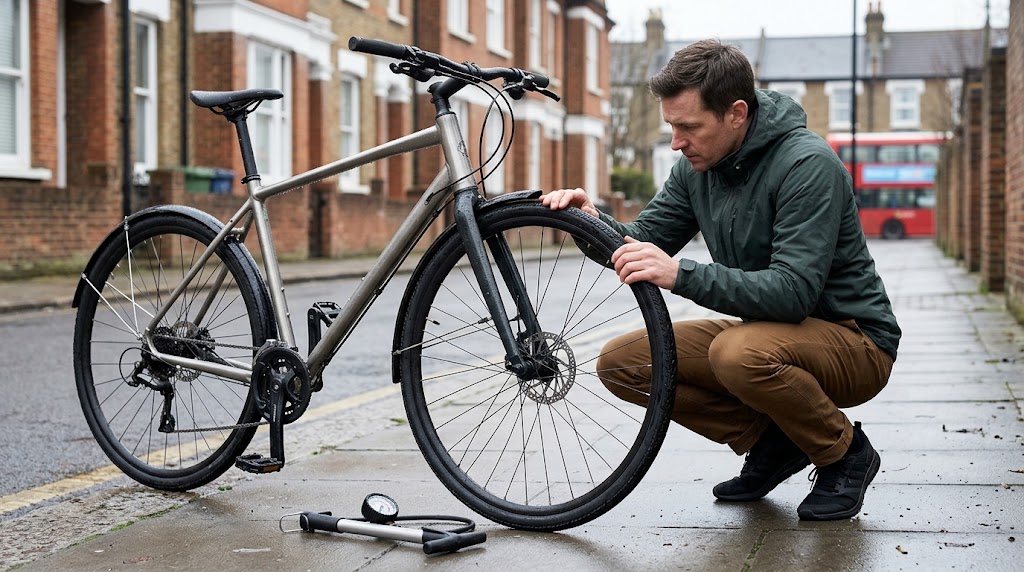
Wet roads can hide potholes, broken glass and other debris that may damage your tyres. Cold weather and frequent riding can also make existing tyre problems more noticeable. Checking your tyres regularly helps you spot issues before they cause a puncture or leave you stranded during your commute.
Look for cuts, cracks, embedded pieces of glass and excessive tread wear. Remove loose debris carefully, but do not dig into the tyre with a sharp object. If you notice exposed casing, a large cut or a bulge in the tyre, have it inspected before riding.
Tyre pressure is equally important. Check the recommended pressure range printed on the tyre sidewall and use a suitable pressure gauge or pump. The correct pressure depends on the tyre, rider weight, bicycle type and riding conditions. Do not assume that maximum pressure is always the best option.
Avoid riding with tyres that are visibly underinflated, as this can increase the risk of pinch punctures and make the bike feel sluggish. Equally, excessively high pressure may reduce comfort and grip on rough surfaces. A quick tyre check before leaving home can save you considerable inconvenience later.
5. Protect Your Gears and Moving Parts
Rain and road dirt can affect your bicycle’s gears, especially if you ride daily without cleaning the drivetrain. You might notice delayed shifting, a chain that jumps between gears or unusual noises when pedalling.
After a wet ride, check the chain, cassette and derailleur for accumulated dirt. Wipe away grime and inspect the derailleur area for anything that appears bent, loose or damaged. Keep the chain lubricated and avoid changing gears under excessive pedalling pressure, particularly when climbing a hill.
If your gears stop changing properly, resist the temptation to turn adjustment screws without knowing what they do. The problem might be caused by a stretched cable, worn drivetrain components or a damaged derailleur rather than a simple adjustment issue.
A mechanic can inspect the system and identify the cause before further riding creates additional wear. Keeping your drivetrain clean and responding to small changes early can help your gears work more reliably throughout winter.
6. Make Your Bike Easier to Ride in the Rain
Some practical accessories can make winter cycling much more comfortable. Mudguards are particularly useful because they reduce the amount of water and road dirt thrown onto your clothes, shoes and bicycle. Full-length mudguards usually provide more coverage than small clip-on alternatives, provided they fit your bike properly.
Good-quality front and rear lights are also important during winter, when daylight hours are shorter and rain can reduce visibility. Check that your lights are charged or have working batteries before leaving home. Position them securely and make sure they remain visible from the appropriate directions.
A waterproof jacket, gloves and suitable footwear can help you stay comfortable during cold, wet journeys. If you carry work clothes or electronic equipment, a waterproof pannier or bag cover may help protect them from rain.
Before buying accessories, check that they are compatible with your bicycle. For example, not every frame has the mounting points required for traditional mudguards or a rear rack. Choosing suitable equipment will make everyday riding more practical without creating unnecessary fitting problems.
7. Dry Your Bike Properly After a Wet Journey
Leaving a wet bicycle in a corner of your home or workplace may seem harmless, but repeated exposure to moisture can encourage corrosion on exposed metal parts. This is particularly important if you store your bike in a cold shed, communal storage room or an area with poor ventilation.
Whenever possible, wipe down the frame, chain, handlebars and other accessible components after riding in heavy rain. Pay attention to bolts and areas where water collects. If the chain has become wet, dry it and reapply lubricant when needed.
Store your bicycle somewhere dry and secure, with enough ventilation to allow moisture to evaporate. Avoid covering a soaking-wet bike with an impermeable cover and leaving it untouched for long periods.
If you keep your bicycle outdoors, use a suitable weather-resistant cover and ensure that the bike is secured properly. A cover can help protect against rain, but it should not be treated as a replacement for cleaning, lubrication or appropriate security.
8. Check Your Bike’s Frame and Components
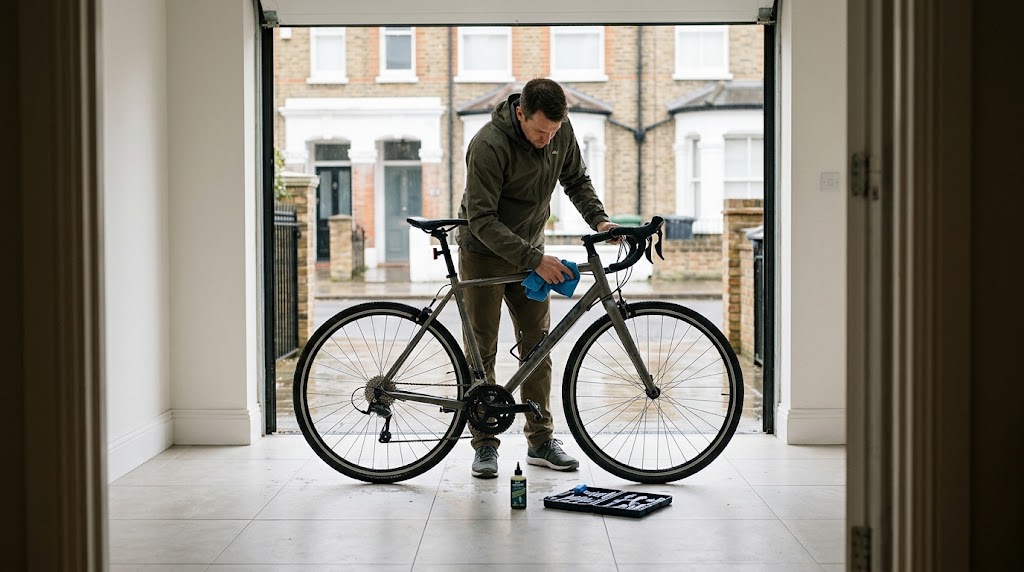
Winter maintenance is not only about cleaning and lubrication. Regular inspections can help you identify loose components or damage before they become serious problems.
Check that the handlebars, saddle and wheels are secure. Look for loose mudguards, rattling accessories and damaged cables. Pay attention to unusual noises, changes in handling or any movement in the wheels when you ride.
If your bicycle has hydraulic disc brakes, suspension or an electric motor, follow the manufacturer’s maintenance recommendations for those systems. Avoid dismantling unfamiliar components without the correct tools and knowledge.
You should also inspect your bike after hitting a deep pothole or striking a kerb. If the wheel appears bent, the steering feels unusual or the frame shows signs of cracking, stop riding and arrange an inspection. A bicycle that feels different from normal may be warning you that something needs attention.
9. Arrange a Service Before Small Problems Become Expensive
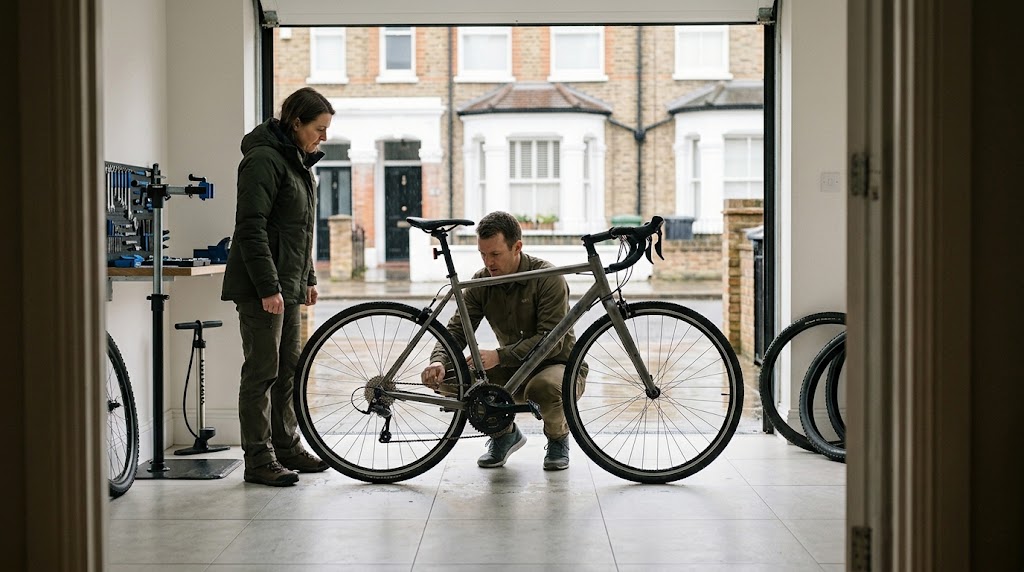
Even if you clean your bicycle regularly, some maintenance tasks require specialist tools or experience. Brake adjustments, gear problems, wheel alignment and drivetrain wear can become more noticeable after weeks of wet-weather riding.
A professional service can help identify worn components, check the braking system, assess the drivetrain and make sure important parts are working correctly. The appropriate service interval depends on how frequently you ride, the conditions you encounter and the manufacturer’s recommendations.
You do not necessarily need to wait until something stops working. If your chain keeps slipping, your brakes feel unreliable or your gears repeatedly miss shifts, arrange an inspection before the issue gets worse.
Keeping a simple maintenance routine throughout winter can also help you understand what is normal for your bike. When a new noise or handling problem appears, you are more likely to notice it early.
Keep Your Bike Ready for Every Winter Journey
A wet London winter does not have to mean constant bicycle repairs or uncomfortable journeys. Cleaning away road grime, keeping the chain lubricated, checking the brakes and tyres, and drying your bike after rainy rides can make a real difference to its condition. Small habits are often more useful than waiting until a component fails. Always take changes in braking, steering or gear performance seriously, and seek professional help when a problem cannot be safely resolved at home. With the right care, your bicycle can remain a dependable choice for commuting and everyday journeys throughout the colder months. If your bike needs a winter check, replacement parts or practical advice on keeping it in good condition, Camden Cycles can help you prepare for the wet weather and keep your cycling routine running smoothly.