
There’s something refreshing about cycling in the rain. The roads are quieter, the air feels cleaner, and a rainy ride can be surprisingly enjoyable when you’re prepared for it. However, once the ride is over, your bike needs attention. Rainwater, road grime, mud, and debris can quickly build up on your bike and cause damage if left untreated.
Many cyclists make the mistake of parking their bike after a wet ride and forgetting about it until the next outing. Unfortunately, this habit can lead to rust, worn-out components, poor performance, and costly repairs. Taking a little time to clean your bike after riding in the rain can significantly extend its lifespan and keep it running smoothly.
In this guide, you’ll learn how to clean your bike properly after a rainy ride and why regular maintenance is one of the best investments you can make as a cyclist.
Why Cleaning Your Bike After Rain Matters
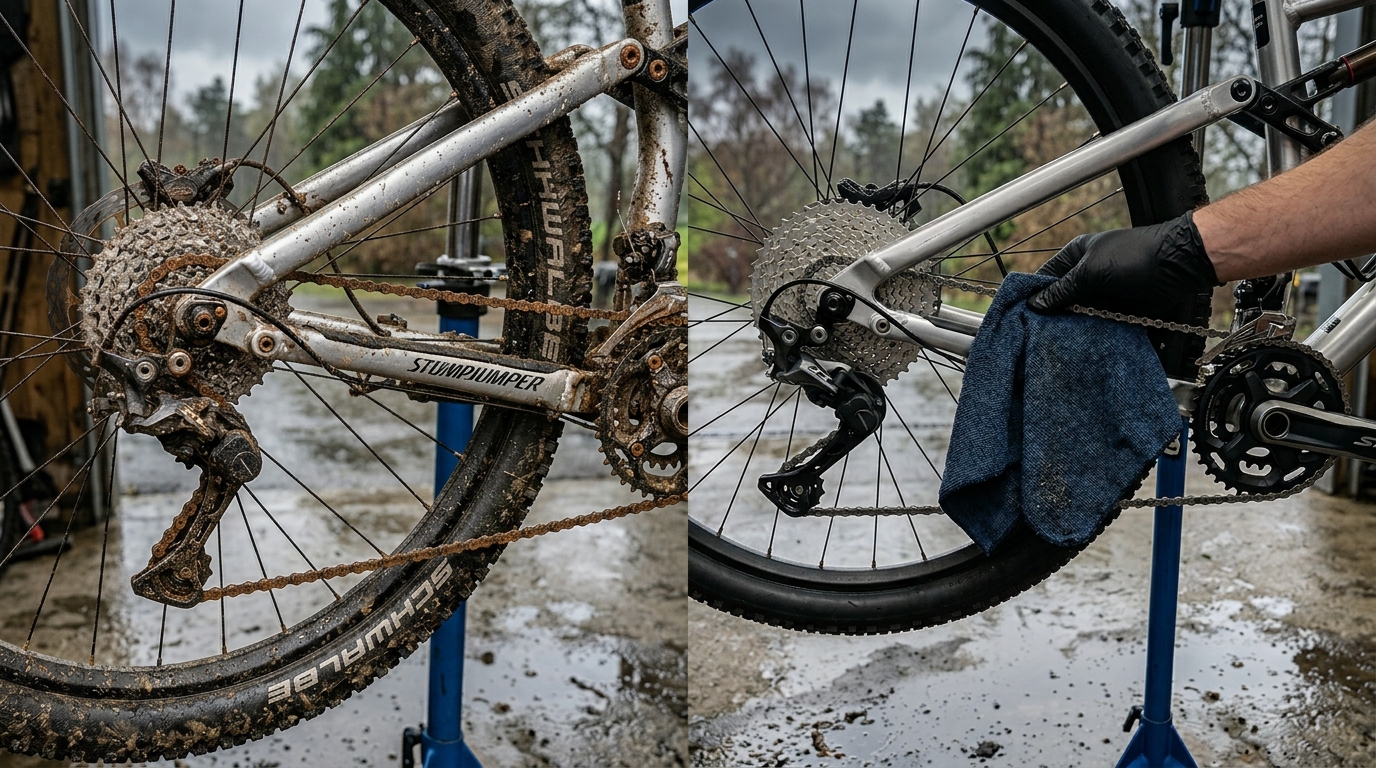
Rain itself isn’t usually the biggest problem. The real issue comes from what the rain carries. Water mixes with dirt, grit, road salt, oil, and other contaminants found on roads and trails. These substances stick to your bike and gradually wear down important components.
The drivetrain, which includes the chain, cassette, and chainrings, is especially vulnerable. Dirt and moisture can remove lubrication and create friction, leading to premature wear. Brake components, bearings, and cables can also suffer if moisture is allowed to sit for too long.
A quick clean after a rainy ride helps prevent corrosion, maintains performance, and saves money on future repairs.
Gather Your Cleaning Supplies
Before you begin, make sure you have the right tools and supplies ready. Fortunately, you don’t need a professional workshop to give your bike a thorough clean.
Here are the essentials:
- Bucket of warm water
- Bike-specific cleaner or mild soap
- Soft sponge
- Microfiber cloths
- Soft-bristle brush
- Chain cleaning tool (optional)
- Degreaser
- Bike lubricant
- Hose with gentle water pressure or a spray bottle
Avoid using high-pressure washers. While they may seem convenient, they can force water into bearings and other sensitive areas, causing damage over time.
Start by Rinsing Off Dirt and Mud
The first step is removing loose dirt, mud, and debris.
Use a gentle stream of water to rinse the entire bike. Focus on the frame, wheels, tyres, and drivetrain. The goal is to loosen surface grime before scrubbing.
If you don’t have access to a hose, a bucket of water and sponge will work perfectly well.
Take your time during this stage. Rushing straight into scrubbing can cause dirt particles to scratch the paintwork.
Clean the Frame Thoroughly
Once the loose dirt has been removed, it’s time to wash the frame.
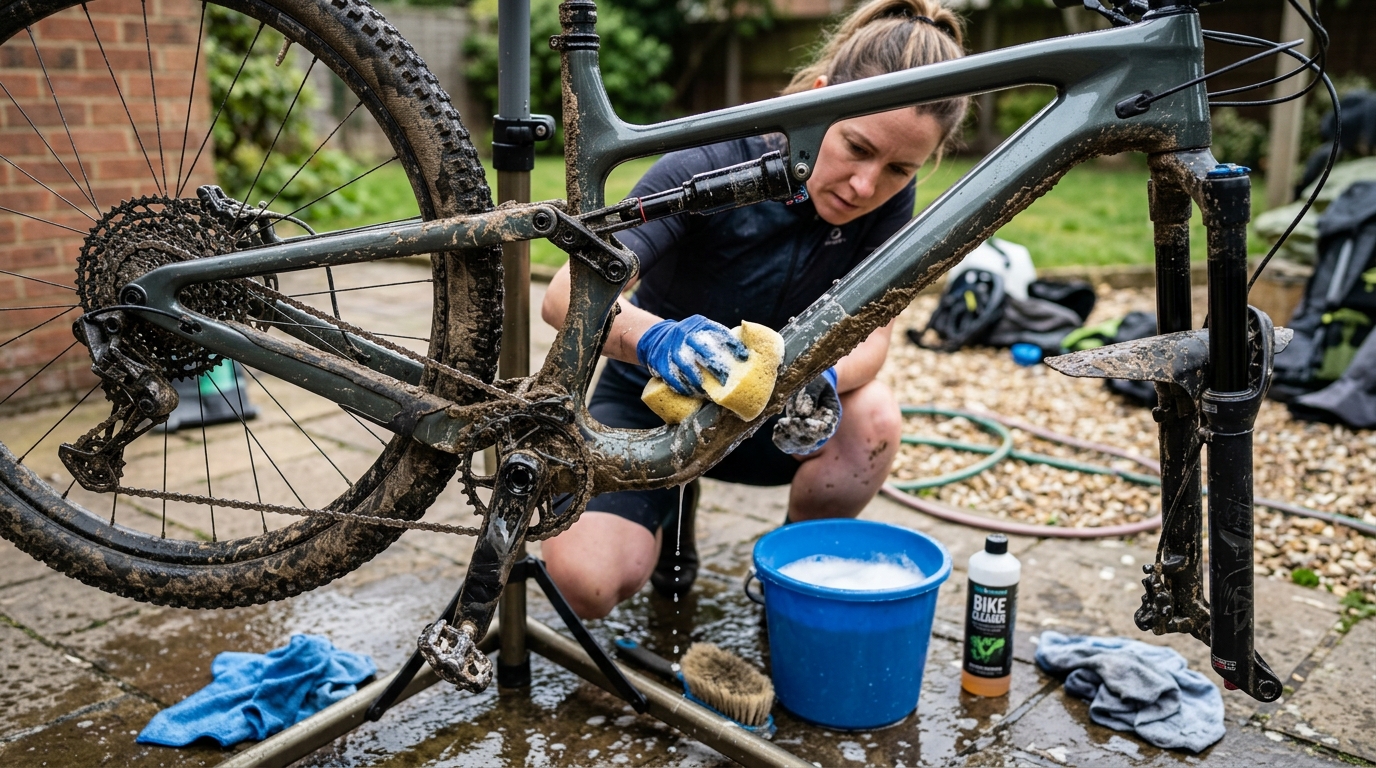
Mix warm water with a small amount of bike cleaner or mild soap. Dip a sponge into the solution and gently wipe down the frame from top to bottom.
Pay extra attention to areas where mud tends to accumulate, including:
- Under the down tube
- Around the bottom bracket
- Seat stays
- Fork crown
- Rear triangle
Working from the top down prevents dirty water from running over already-cleaned sections.
After cleaning, rinse away any remaining soap residue with clean water.
Give the Drivetrain Special Attention
The drivetrain is the hardest-working part of your bike and usually gets the dirtiest during wet rides.
Start by inspecting the chain. If it appears black, gritty, or sticky, it needs cleaning.
Apply a degreaser to the chain and cassette. Use a brush or chain-cleaning tool to remove built-up grime. Rotate the pedals backward while cleaning to ensure every link receives attention.
Next, scrub the cassette, chainrings, and derailleur pulleys. These components often trap mud and road debris that can affect shifting performance.
Once clean, rinse lightly and dry thoroughly before applying fresh lubricant.
A clean drivetrain not only lasts longer but also makes cycling more efficient and enjoyable.
Don’t Forget the Wheels and Tyres
Wheels often collect road dirt, mud, and small stones during wet weather.
Inspect the tyres carefully for embedded glass, sharp debris, or cuts. Removing these objects early can help prevent future punctures.
Use a brush or sponge to clean the tyre sidewalls and tread. Then wipe down the wheel rims and spokes.
For bikes with disc brakes, avoid touching the brake rotors with oily hands or lubricants. Contaminated brake rotors can reduce braking performance and create unwanted noise.
Taking a few minutes to inspect your tyres after every rainy ride can help you avoid unpleasant surprises on your next journey.
Clean the Braking System
Your brakes play a critical role in safety, particularly during wet conditions.
For rim brakes, wipe the braking surfaces with a clean cloth to remove dirt and residue. Check brake pads for wear and embedded debris.
For disc brakes, use a dedicated brake cleaner or rubbing alcohol on a clean cloth. Gently wipe the rotors to remove contaminants.
Listen for unusual noises after cleaning. Persistent squealing may indicate contamination or worn brake pads that need replacing.
Proper brake maintenance ensures reliable stopping power when you need it most.
Dry Your Bike Completely
Many cyclists underestimate the importance of drying.
Leaving water on the bike allows moisture to settle into hard-to-reach areas where corrosion can begin. After washing, use a microfiber cloth to dry all visible surfaces.
Focus on:
- Chain
- Cassette
- Brake components
- Bolts
- Cable housings
- Frame joints
You can also let the bike air dry in a well-ventilated area, but wiping it down first speeds up the process and reduces water spots.
A dry bike is far less likely to develop rust or mechanical issues.
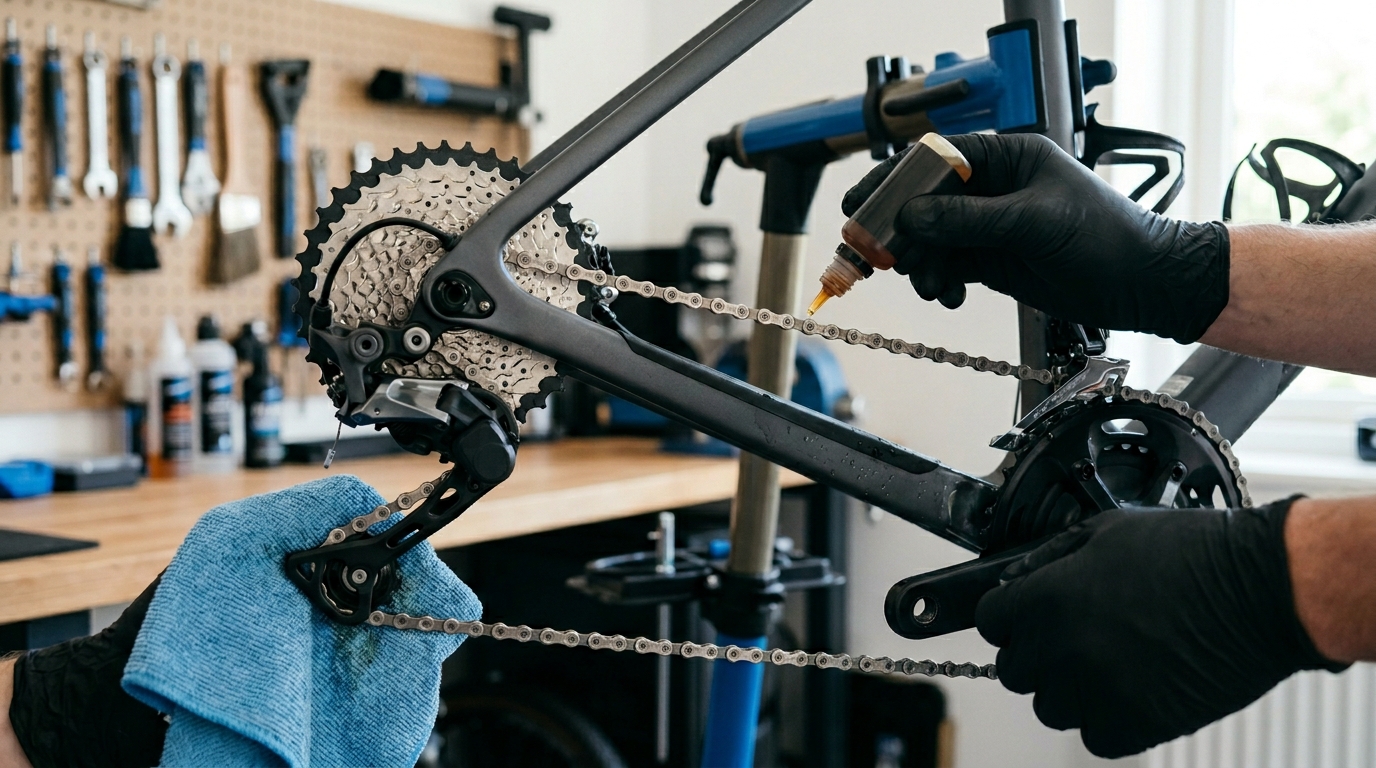
Lubricate the Chain Properly
After cleaning and drying, the chain needs fresh lubrication.
Apply bike-specific chain lubricant one drop at a time while slowly rotating the pedals backward. Make sure the lubricant reaches every chain link.
Allow it to sit for a few minutes before wiping away any excess with a clean cloth.
More lubricant is not always better. Excess oil attracts dirt and grime, which can quickly undo your cleaning efforts.
For cyclists who frequently ride in wet conditions, a wet-weather chain lubricant often provides better protection against moisture.
Inspect for Wear and Damage
Cleaning provides the perfect opportunity to check your bike’s condition.
As you clean, look for:
- Cracked tyres
- Loose bolts
- Worn brake pads
- Damaged cables
- Chain wear
- Bent components
Spotting problems early often prevents more serious mechanical failures later.
Regular inspections can also improve safety and reduce unexpected breakdowns.
Store Your Bike Correctly
After cleaning and drying, proper storage is essential.
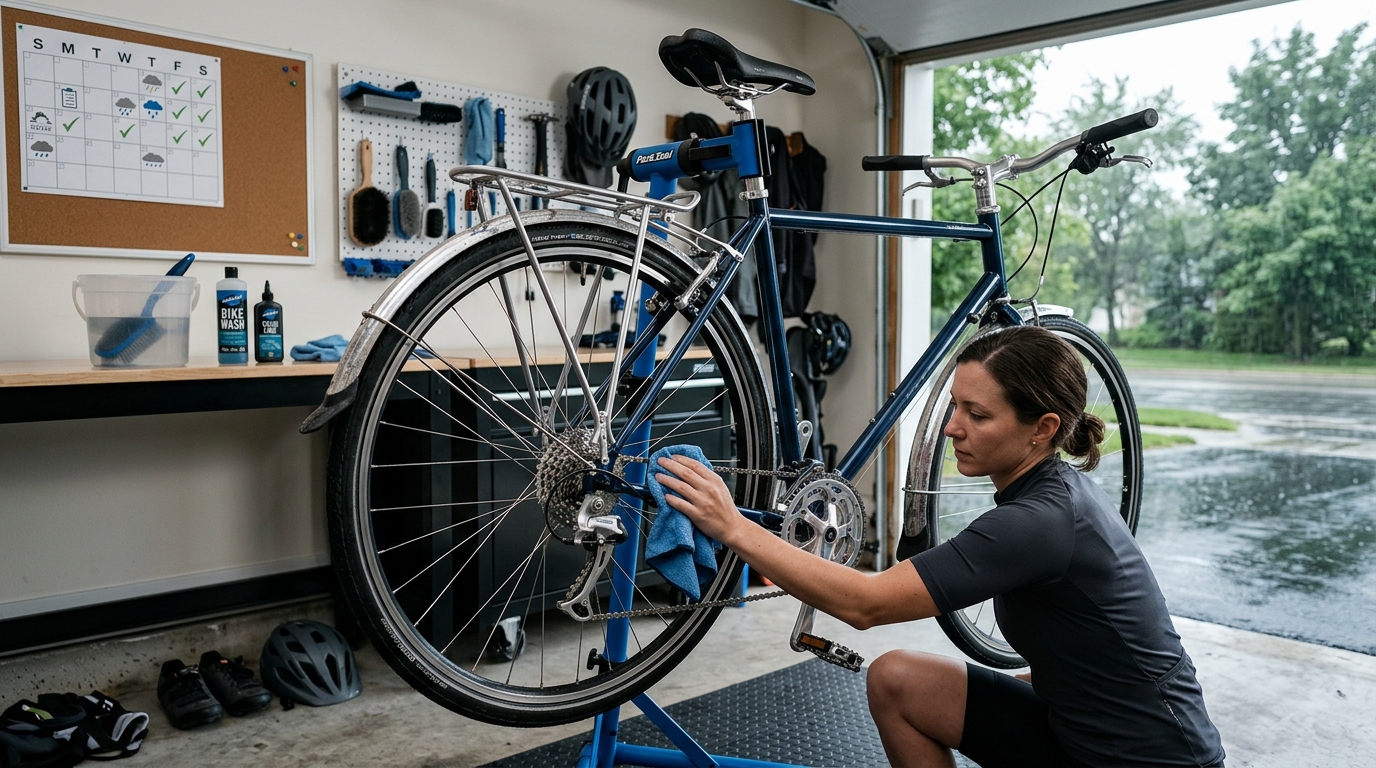
Whenever possible, keep your bike indoors or in a dry, sheltered location. Garages, sheds, and indoor bike racks provide much better protection than leaving a bike exposed to the elements.
If outdoor storage is unavoidable, invest in a quality waterproof bike cover.
A clean bike stored in a dry environment will remain in far better condition throughout the year.
How Often Should You Clean Your Bike?
The frequency depends on how often you ride and the conditions you encounter.
For occasional riders, a thorough clean after every wet ride is usually sufficient.
For commuters and regular cyclists, a quick wipe-down after rainy rides combined with a deeper clean every week or two can help maintain peak performance.
Remember, regular maintenance takes far less time than replacing worn-out components.
Final Thoughts
Rainy rides are part of cycling life, especially in the UK. While wet weather can leave your bike covered in dirt and grime, a simple cleaning routine can protect your investment and keep every ride smooth and enjoyable. By rinsing away debris, cleaning the drivetrain, drying thoroughly, and applying fresh lubrication, you’ll prevent rust, improve performance, and extend the life of your bike.
If your bike needs a professional service after repeated wet-weather riding, the experienced team at Camden Cycles can help. From drivetrain maintenance and brake inspections to complete bike servicing, keeping your bike in top condition ensures you’re always ready for your next adventure, whatever the weather brings.