
E-Bike Maintenance: What Needs Checking Regularly?
Electric bikes have become a popular choice for everyday cycling, especially for commuters who want a little extra assistance when dealing with hills, longer journeys and busy city streets. An e-bike can make cycling easier, but it still needs regular care. The electric motor and battery may be the parts that make an e-bike different from a traditional bicycle, but the brakes, tyres, chain, gears and wheels still need attention.
The good news is that looking after an e-bike does not have to be complicated. A few simple checks carried out regularly can help keep your bike running smoothly and allow you to spot small problems before they turn into expensive repairs. Whether you ride your e-bike every day or only use it at weekends, here are the main areas you should keep an eye on.
Check Your Tyre Pressure
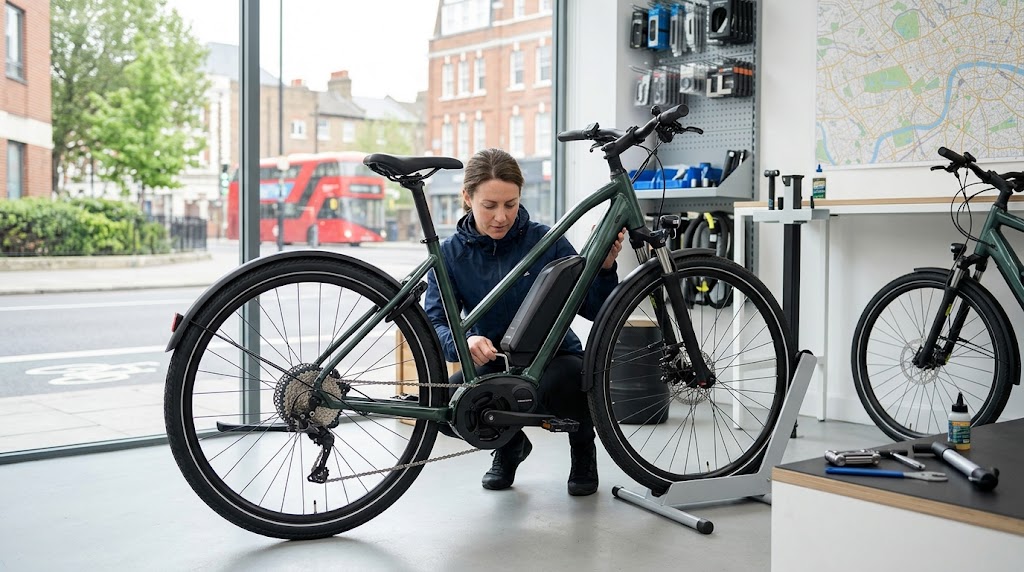
Tyres are one of the easiest parts of an e-bike to overlook. Because electric bikes are generally heavier than conventional bicycles, correct tyre pressure is particularly important.
Before a ride, take a quick look at both tyres. If they appear noticeably soft, check the pressure with a suitable pump and pressure gauge. The recommended pressure is normally printed on the tyre sidewall, although the ideal pressure can also depend on the rider, bike and type of riding.
Riding with underinflated tyres can increase rolling resistance and make the motor work harder. It can also affect handling and increase the chance of pinch punctures.
Do not simply inflate the tyres to the maximum pressure shown on the sidewall. Follow the manufacturer’s recommendations and choose a pressure suitable for your riding conditions.
Inspect the Brakes
Good brakes are essential on every bicycle, but they are particularly important on an e-bike because of the extra weight and the speeds that can be reached.
Before setting off, squeeze both brake levers and pay attention to how they feel. They should feel firm and should not pull all the way back towards the handlebars.
Look at the brake pads if they are visible and check for excessive wear. If you have disc brakes, inspect the rotors for obvious damage and listen for unusual rubbing or scraping sounds.
If your brakes feel weak, make unusual noises or require much more pressure than normal, do not ignore the problem. Braking components can wear over time and may need adjustment or replacement.
Keep the Chain Clean and Lubricated
If your e-bike uses a chain-driven system, the chain needs regular attention just like the chain on a normal bicycle.
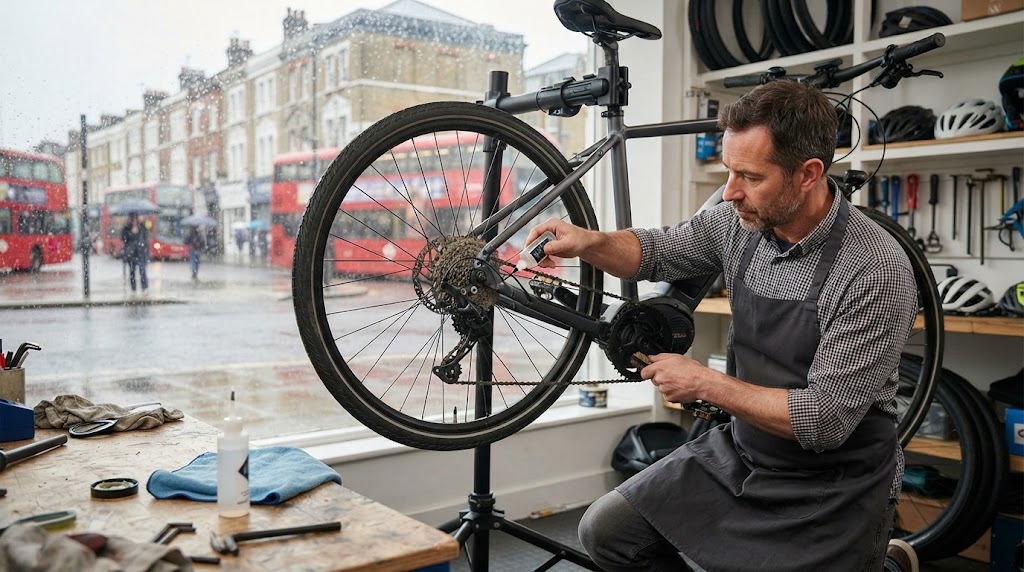
During everyday riding, particularly in wet London weather, the chain can collect water, dirt and road grime. A dirty chain can become noisy and increase wear on the drivetrain.
Clean the chain when it becomes visibly dirty and apply a suitable bicycle chain lubricant afterwards. Avoid putting excessive lubricant on the chain, as extra oil can attract dirt.
It is also worth checking the chain for signs of rust, stiffness or excessive wear. If the chain has covered a large number of miles, consider having it checked as part of a service.
Check the Gears
Smooth gear changes make a big difference to how an e-bike feels on the road.
Take the bike for a short ride and move through the gears. The chain should shift smoothly without repeatedly skipping, jumping or making loud grinding noises.
If the gears struggle to change, the issue could be caused by a worn chain, cassette, derailleur, cable or adjustment problem.
Do not wait until the gears stop working completely before dealing with the issue. A small adjustment may be all that is needed when a problem is caught early.
Look After the Battery
The battery is one of the most important components of an e-bike, so it deserves regular attention.
Check the battery casing for obvious damage and make sure it is securely fitted to the bike. If the battery is removable, make sure the contacts and mounting points are clean and dry.
Use the charger recommended by the manufacturer and follow the manufacturer’s instructions for charging and storage. Avoid exposing the battery to extreme conditions, and do not continue using a battery that appears damaged.
If you notice a sudden and unusual reduction in battery performance, investigate it rather than simply assuming it is normal. Battery range can naturally change depending on temperature, rider weight, terrain, assistance level and riding conditions, but a significant change may be worth checking.
Inspect the Motor Area
The electric motor normally requires less day-to-day maintenance than the bicycle’s mechanical components, but that does not mean you should completely forget about it.
Keep the area around the motor clean and check for obvious signs of damage, loose parts or unusual noises.
If the motor starts making a sound that was not present before, or the assistance becomes inconsistent, it is better to have the system inspected rather than attempting to open or repair the motor yourself.
Electrical components can be complicated, and manufacturer-specific systems often require specialist knowledge.
Check the Wheels and Spokes
A quick wheel check can reveal problems before they become serious.
Spin each wheel and look for unusual side-to-side movement. Check whether any spokes appear loose or damaged and make sure there are no obvious cracks or dents in the rim.
Because e-bikes can be heavier than traditional bicycles, wheels can experience considerable stress, particularly when riding over potholes and rough surfaces.
If you notice a wheel wobbling or hear unusual noises, have it checked before continuing to use the bike regularly.
Check the Lights and Electrical Connections
Lights are particularly important if you commute early in the morning or after dark.
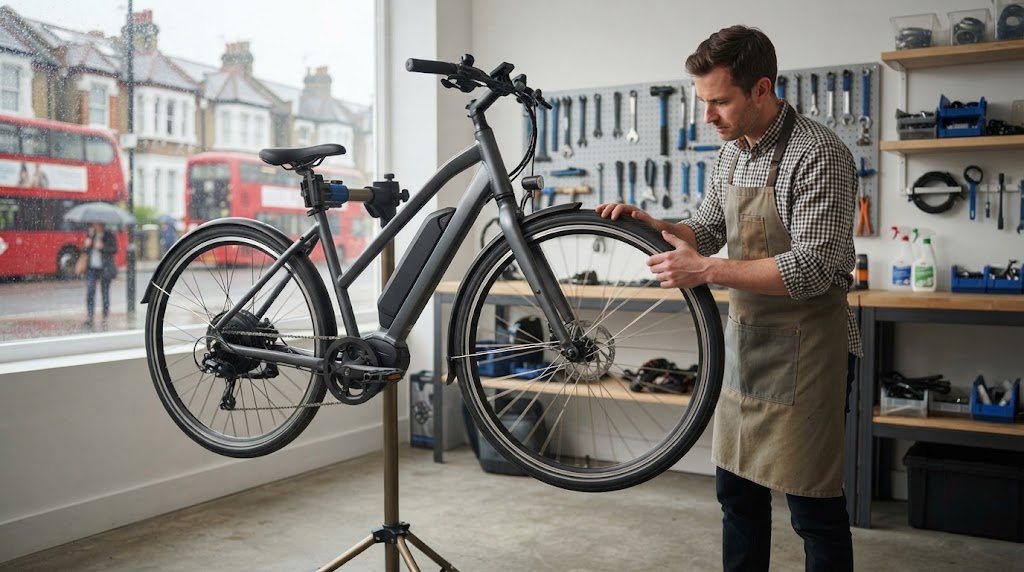
If your e-bike has integrated lights, switch them on and make sure both the front and rear lights work correctly. Check that displays, buttons and other controls respond as expected.
Look at exposed cables and connections for signs of damage. Avoid pulling or bending electrical cables unnecessarily.
If an electrical connection becomes loose or damaged, have it checked properly rather than trying to repair it with a temporary solution.
Inspect Bolts and Fittings
E-bikes experience vibration during normal riding, and over time some bolts and fittings can become loose.
Every so often, check important areas such as the handlebars, stem, saddle, seatpost and wheels. Pay particular attention to anything that feels loose or moves when it should not.
Do not overtighten bolts, especially if the manufacturer’s recommended torque is available. Some bicycle components can be damaged by excessive force.
If you are unsure about tightening a particular component, a professional bike mechanic can check it safely.
Keep Your E-Bike Clean
Cleaning your e-bike is not just about making it look good.
Dirt and road grime can build up around the drivetrain, wheels, brakes and frame. Regular cleaning makes it easier to spot damage and helps prevent dirt from affecting moving components.
Use a suitable bicycle cleaning method and avoid directing high-pressure water at the motor, battery connections, bearings or other sensitive areas.
After riding in heavy rain, dry the bike where possible and pay attention to the chain and other exposed metal components.
How Often Should an E-Bike Be Checked?
There is no single maintenance schedule that suits every e-bike. A bicycle ridden every day through winter will need more attention than one used occasionally in dry weather.
A simple routine can help. Before regular rides, check the tyres, brakes and battery. Every few rides, look over the chain, gears, wheels and general condition of the bike.
If you use your e-bike heavily, consider arranging professional servicing at suitable intervals based on the manufacturer’s recommendations and your riding habits.
Do not wait for a major problem before having the bike inspected. Regular maintenance is usually easier than dealing with a breakdown during an important journey.
Don’t Ignore Small Changes
One of the best maintenance habits is simply paying attention to how your e-bike feels.
Does the motor sound different? Are the brakes taking longer to stop you? Has the chain suddenly become noisy? Is the battery range noticeably different? Does the bike feel less stable than usual?
These small changes are worth noticing.
A problem that feels minor today may become more expensive if it is ignored for months. Catching issues early can help protect other components and keep your e-bike reliable.
A Simple E-Bike Maintenance Routine
You do not need to spend hours maintaining your e-bike every week. A quick inspection can take only a few minutes.
Before riding, check the tyre pressure, brakes, wheels and battery. After riding in wet or dirty conditions, give the bike a basic clean and dry the important components.
Regularly clean and lubricate the chain, inspect the gears and look for worn brake pads or tyres. If you notice an electrical fault, damaged battery, unusual motor behaviour or another problem you cannot identify, seek professional assistance.
An e-bike is an investment, and regular maintenance helps you get more reliable use from it. Keeping the mechanical parts in good condition while also looking after the electrical system can make everyday rides smoother, safer and more enjoyable.
If your e-bike needs a professional check, servicing or replacement parts, Camden Cycles can help you keep your bike in good working condition and ready for your next journey around London.