
What to Check Before Buying a Used Bicycle
Buying a used bicycle can be a great way to get a reliable bike without spending as much as you would on a brand-new model. Whether you need a bicycle for commuting, weekend rides, fitness or everyday journeys, the second-hand market offers plenty of options at different prices.
However, not every used bicycle is in good condition. Some bikes may look clean and well-maintained but have worn components, hidden damage or mechanical problems that could become expensive to fix later.
Before making a purchase, it is important to inspect the bicycle carefully and understand what you are paying for. From the frame and brakes to the tyres and gears, a few simple checks can help you avoid unnecessary repair costs and choose a bike that suits your needs.
Here are some important things to check before buying a used bicycle.
1. Inspect the Bicycle Frame for Damage
The frame is one of the most important parts of any bicycle. It supports the rider and connects the main components, so its condition should always be checked before buying.
Look carefully for cracks, dents, deep scratches, rust and signs of previous repairs. Pay particular attention to areas around the head tube, bottom bracket, seat tube and rear dropouts, as these sections experience considerable stress.
Small paint scratches are usually cosmetic, but cracks or significant dents can indicate structural damage. Rust should also be taken seriously, especially if it appears around joints or has affected the metal beneath the paint.
If the frame is badly damaged, it may not be safe to ride. Avoid purchasing a bicycle with suspected structural damage unless it has been properly assessed by a qualified mechanic.
2. Check the Wheels and Rims
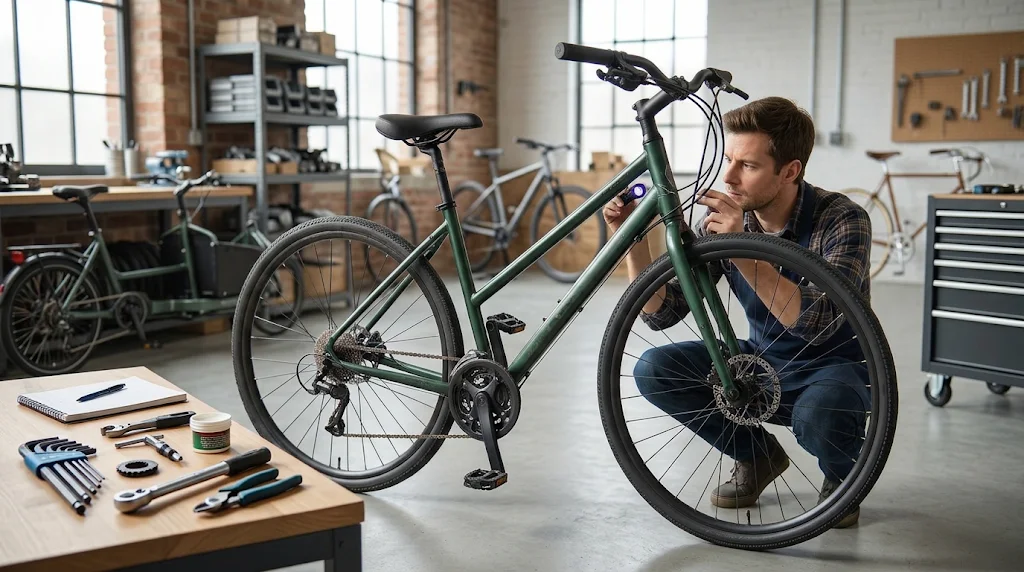
Wheels have a major impact on how smoothly and safely a bicycle rides. Before purchasing a used bike, inspect both wheels for damage and excessive wear.
Spin each wheel and watch how it moves. It should rotate smoothly without moving noticeably from side to side. If the rim wobbles, it may need to be adjusted or trued.
- Also check the following:
- Bent or damaged wheel rims.
- Loose, missing or broken spokes.
- Cracks around the rim.
- Unusual noises when the wheel rotates.
- Excessive movement in the wheel hubs.
Lift the bicycle slightly and spin the wheels to check their movement. If you notice grinding sounds or excessive play, the bearings may require attention.
Wheel repairs can sometimes be inexpensive, but replacing damaged wheels may add considerably to the overall cost.
3. Examine the Tyres for Wear
Bicycle tyres are constantly exposed to road surfaces, sharp objects and changing weather conditions. Over time, their rubber can become worn, cracked or damaged.
Check both tyres carefully for cuts, bulges, exposed threads and uneven wear. A tyre with very little tread may offer reduced grip, particularly on wet roads.
You should also check whether the tyres are holding air properly. If they feel very soft, inflate them and see whether they remain firm.
Replacing both tyres can increase the cost of buying a used bicycle, so consider their condition when negotiating the price.
4. Test the Brakes Properly
Working brakes are essential for safe cycling. Never assume that a bicycle is ready to ride simply because it looks clean or has recently been used.
Check whether the brake levers feel firm and return to their normal position after being released. They should not pull all the way towards the handlebars.
For rim brakes, inspect the brake pads and check that they make proper contact with the braking surface. The pads should not be excessively worn or positioned against the tyre.
For disc brakes, look at the brake pads and rotors. Check for deep grooves, excessive wear, contamination or visible damage.
If possible, test the brakes at a low speed in a safe area. Both front and rear brakes should respond effectively without unusual noises or excessive vibration.
Any bicycle with faulty brakes should be repaired before being ridden on public roads.
5. Check the Gears and Drivetrain
The gears allow you to adjust your pedalling effort for different speeds, hills and riding conditions. A used bicycle with worn or poorly adjusted gears may require additional maintenance.
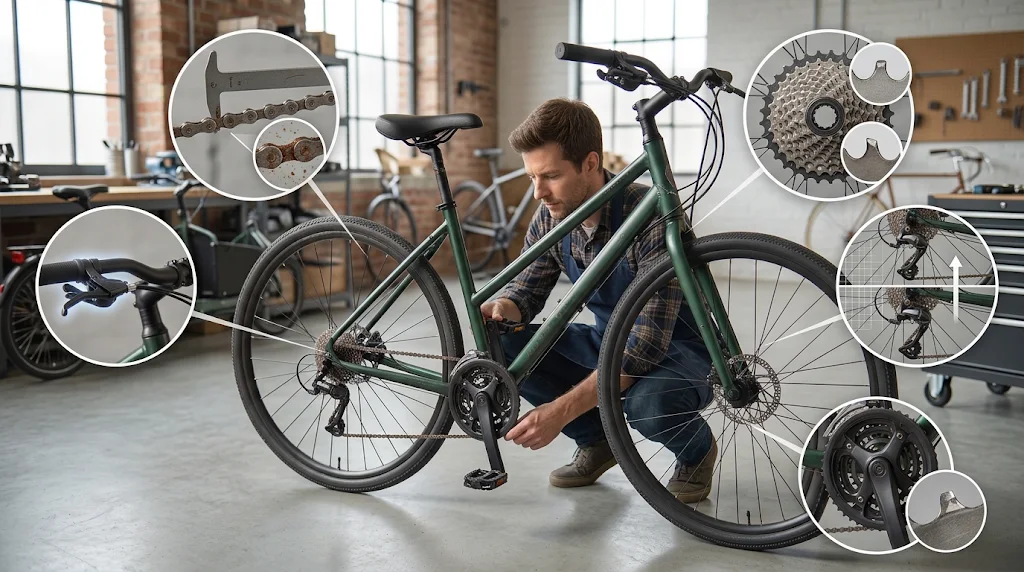
Turn the pedals and change through the available gears. The chain should move smoothly between the sprockets without skipping, grinding or becoming stuck.
- Pay attention to the following components:
- Chain: Look for rust, stiffness and excessive wear.
- Cassette or freewheel: Check for damaged or unusually worn teeth.
- Chainrings: Inspect the teeth for excessive wear.
- Derailleurs: Make sure they are not bent or damaged.
- Gear shifters: Check that they operate smoothly.
A worn chain is relatively straightforward to replace, but if it has damaged the cassette or chainrings, the repair can become more expensive.
If the bicycle has internal hub gears, check that all gears engage properly and that the gear-changing mechanism works as expected.
6. Look for Signs of Rust and Poor Maintenance
A bicycle that has been stored outside or exposed to rain for long periods may develop rust on its metal components.
Check the chain, bolts, handlebars, seat post, pedals, brake cables and other exposed metal parts. Surface rust may be manageable, but heavy corrosion can weaken components and make them difficult to remove or replace.
Also look at the general condition of the bicycle. A clean frame does not necessarily mean the bike has been maintained properly.
A heavily dirty drivetrain, rusty chain and poorly adjusted brakes may suggest that regular maintenance has been neglected.
Ask the seller when the bicycle was last serviced and whether any major components have recently been replaced.
7. Make Sure the Bicycle Is the Correct Size
Choosing the correct frame size is just as important as checking the mechanical condition.
A bicycle that is too large or too small can make riding uncomfortable and difficult to control. It may also cause unnecessary strain on your back, shoulders, knees and wrists.
When checking the size, consider:
- Your height and leg length.
- The manufacturer’s recommended frame size.
- Your preferred riding position.
- Whether you can comfortably reach the handlebars.
- Whether the saddle can be adjusted to a suitable height.
Bicycle sizing varies between manufacturers and bike types, so a medium frame from one brand may not fit exactly like a medium frame from another.
If possible, sit on the bicycle and take a short test ride before purchasing it.
8. Inspect the Saddle, Handlebars and Pedals
These components affect your comfort and control while riding, so they should not be overlooked.
Check the saddle for tears, excessive wear or damage to its rails. Make sure it can be adjusted properly and stays securely in position.
The handlebars should be straight, firmly attached and free from cracks or serious damage. Check that the grips or handlebar tape are not excessively worn.
Turn the pedals by hand and check for unusual movement, grinding or stiffness. Loose or damaged pedals may need replacing.
Also make sure the handlebars, stem and saddle do not move unexpectedly when pressure is applied.
9. Check the Bicycle’s History and Ownership
Before buying a second-hand bicycle, it is sensible to ask the seller about its history.
Find out how long they have owned it, how frequently it has been used and whether it has been involved in an accident.
Ask whether they have any original purchase documents, receipts or service records. These can help provide confidence about the bicycle’s history and maintenance.
You should also check that the seller has the right to sell the bicycle. In the UK, you can use services such as BikeRegister to check a bicycle’s frame number against registered stolen-bike records.
Be cautious if the seller cannot provide a reasonable explanation of where the bicycle came from, refuses to let you inspect it or offers a price that seems unusually low.
10. Take the Bicycle for a Test Ride
A test ride is one of the best ways to identify problems that may not be obvious during a visual inspection.
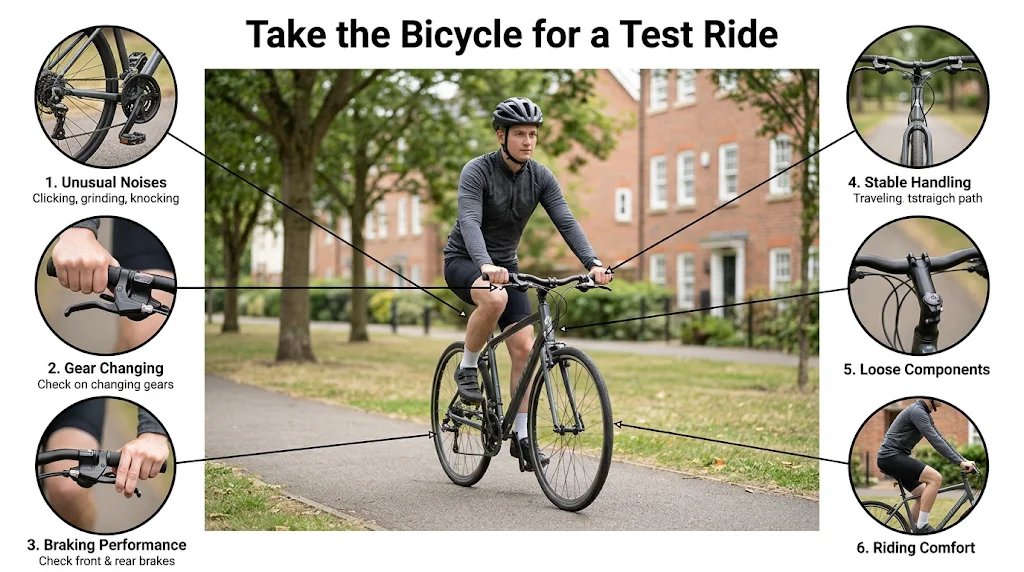
Find a safe, quiet area and ride the bicycle at a comfortable speed. Pay attention to how it feels when accelerating, braking, changing gears and turning.
During the ride, check for:
- Unusual clicking, grinding or knocking sounds.
- Difficulty changing gears.
- Weak or inconsistent braking.
- Wobbling or unstable handling.
- Excessive movement in the handlebars or saddle.
- Uncomfortable riding position.
- Try riding in different gears and test both brakes separately at a safe speed.
If anything feels unusual, ask the seller about it before making a decision. Do not ignore problems simply because the bicycle looks attractive or is being offered at a good price.
11. Consider the Cost of Future Repairs
A used bicycle may have an attractive purchase price, but that does not always mean it offers the best value.
Before buying, consider whether any components will need replacing soon. Worn tyres, brake pads, chains, cables and other parts can increase the total cost.
For example, a bicycle that costs slightly more but has recently been serviced may offer better value than a cheaper bike requiring several repairs.
It is also worth checking whether replacement parts are readily available. Older or unusual bicycle models may require components that are more difficult to find.
If you are unsure about the condition of a particular bicycle, ask a professional mechanic to inspect it before completing the purchase.
12. Choose a Bicycle That Matches Your Riding Needs
Not every bicycle is suitable for every type of journey. Before making a purchase, think about where and how you plan to ride.
A hybrid bicycle can be a practical option for commuting and general everyday use. Mountain bikes are designed for rougher terrain and off-road riding, while road bikes are generally better suited to paved roads and longer-distance cycling.
You should also consider practical features such as:
- Number of gears.
- Type of braking system.
- Frame material.
- Wheel size.
- Mudguards and luggage racks.
- Overall weight.
Choosing a bicycle that matches your daily requirements will make it easier to enjoy riding and get good value from your purchase.
Final Thoughts
Buying a used bicycle can be an excellent way to save money, but taking time to inspect it properly can prevent unexpected problems later. Always check the frame, wheels, tyres, brakes, gears and overall condition before making a decision. Pay attention to the bicycle’s history, make sure it fits comfortably and take it for a test ride whenever possible. If you are uncertain about its mechanical condition, getting advice from an experienced bicycle mechanic is a sensible step. Whether you are looking for a commuter bike, mountain bike, hybrid or road bicycle, Camden Cycles can help you explore suitable options and find a used bicycle that matches your riding needs and budget.