
Bike Security in London: 8 Mistakes That Make Your Bike Easy to Steal
Cycling around London is one of the easiest ways to get from one place to another. You can avoid traffic, save money on transport and enjoy a bit of fresh air along the way. But there is one thing every cyclist needs to think about: bike security.
London has plenty of secure cycle parking, but bike theft is still a concern for riders. A good lock helps, but even the best lock cannot do much if it is used incorrectly or your bike is left in an easy target location.
The good news is that many bike thefts can be made more difficult simply by changing a few habits.
Here are eight common bike security mistakes that could make your bicycle easier to steal — and what you can do instead.
1. Using a Cheap or Weak Lock
One of the biggest mistakes cyclists make is choosing a lock based only on price.
A basic cable lock might look convenient and easy to carry, but many lightweight cable locks offer limited protection against determined thieves. They are useful as an extra layer of security, but relying on one alone can be risky, particularly when leaving an expensive bike unattended.
A stronger D-lock or quality chain lock is generally a better choice for securing your main frame to a fixed object.
When buying a lock, think about the value of your bike and where you normally leave it. A bike that costs hundreds or even thousands of pounds deserves more than the cheapest lock you can find.
It is also worth considering the lock’s size. A huge lock may seem safer, but excess space can sometimes give a thief more room to work with.
2. Locking Only the Wheel
You might be surprised how often bikes are secured by the wheel rather than the frame.
Imagine arriving at a café, putting your front wheel against a cycle stand and attaching your lock through the wheel. It looks secure at first glance, but a thief may be able to remove the wheel and take the rest of the bicycle.
The frame is the most important part of your bike to secure.
Whenever possible, pass the lock through the frame and a wheel, then attach it to a solid, immovable cycle stand or other suitable anchor point.
If your bike has quick-release wheels, consider securing them separately if you are leaving the bike somewhere for a longer period.
The aim is simple: don’t make it easy for someone to separate your bike from its wheels or its parking point.
3. Leaving Your Bike in the Same Place Every Day
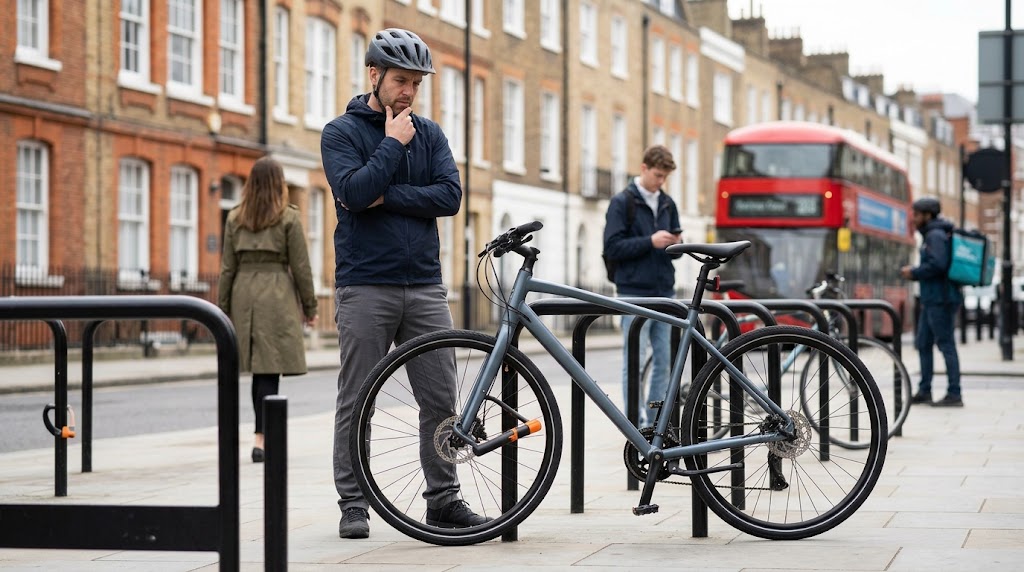
Routine is convenient for you — but it can also be convenient for a thief.
If you lock your bike in exactly the same location at the same time every day, you are creating a predictable pattern. Someone who regularly passes through the area could notice when your bike is left unattended.
This does not mean you need to change your entire commute every morning. But if you have several suitable places to park, consider varying where you leave your bike.
Busy, well-used cycle parking areas are often preferable to isolated spots. Good lighting and regular pedestrian traffic can also make a difference.
Think about your bike parking habits in the same way you think about your cycling route: a little variety can be useful.
4. Choosing an Isolated Parking Spot
A quiet corner may seem like the perfect place to leave your bike because there is less chance of someone bumping into it.
Unfortunately, that privacy can work against you.
A bicycle left behind a building, down a quiet alley or in a poorly lit area can attract unwanted attention. Thieves generally prefer situations where they can work without being noticed.
Whenever possible, choose a busy and visible location.
Look for proper cycle parking near shops, stations, workplaces or other areas with regular activity. If there is CCTV coverage, even better — although you should never assume that cameras alone will protect your bike.
Visibility is an important part of security.
5. Forgetting About the Accessories
Your bike itself may be securely locked, but what about everything attached to it?
Lights, bags, pumps, computers, bottles and other accessories can be tempting targets. You might only be away for ten minutes, but a small accessory can disappear surprisingly quickly.
If an item can be easily removed without a tool, ask yourself whether you really want to leave it on the bike.
Take removable accessories with you whenever practical. For items that need to remain on the bike, consider using appropriate security fittings.
It is easy to focus entirely on the frame and forget that the smaller components can also cost money to replace.
6. Assuming Your Bike Is Too Ordinary to Steal
“I don’t have an expensive bike, so nobody would steal it.”
It is an understandable thought, but it is not a good security strategy.
A thief does not necessarily need to find a high-end road bike or expensive electric bike to make a theft worthwhile. Bikes of different types and values can be targeted.
Even an older hybrid or basic commuter bike has resale value, and replacing a bicycle after it has been stolen can be expensive and frustrating.
Treat your bike as something worth protecting, regardless of how much you originally paid for it.
A good lock and sensible parking habits cost much less than replacing an entire bicycle.
7. Not Registering Your Bike
Security does not end when you lock your bike.
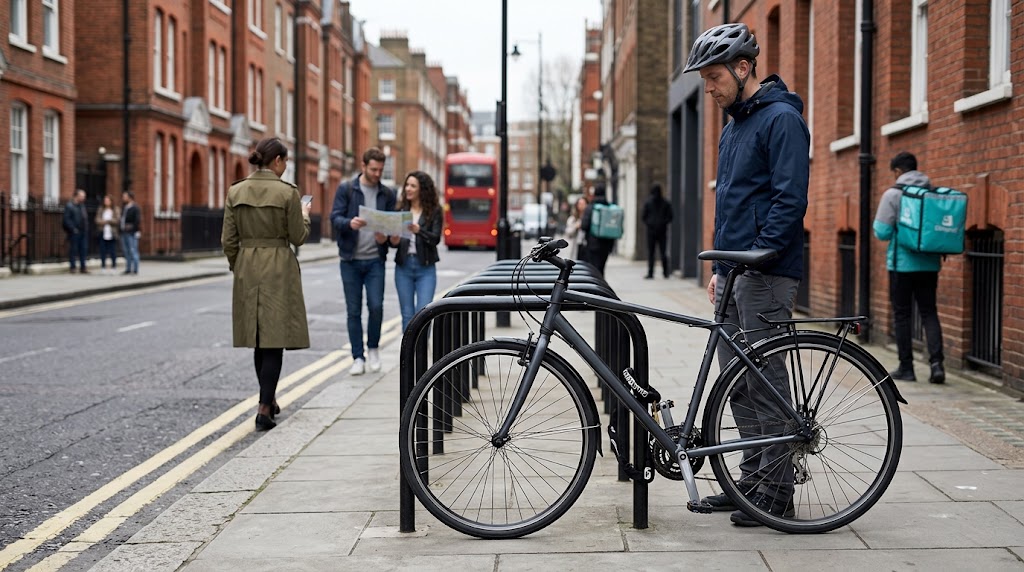
It is also worth keeping a record of your bicycle’s details. Write down the make, model, colour and frame number, and keep photographs of the bike somewhere safe.
Bike registration services can provide another useful layer of identification.
Why does this matter?
If your bike is stolen, having clear information about it can make reporting the theft easier. If you spot the bicycle being advertised online or it is recovered later, photographs and identifying details can help demonstrate that it belongs to you.
Take a few minutes to photograph your bike from different angles. Pay particular attention to unique scratches, accessories or other features that could help identify it.
It is much easier to collect this information while you still have the bike.
8. Leaving Your Bike Unlocked “Just for a Minute”
This is perhaps the easiest mistake to make.
You pop into a shop. You only need to grab a coffee. You are meeting a friend and will be back in two minutes.
So you leave your bike unlocked.
Unfortunately, a few minutes can be enough.
Bike theft does not always require a long period of planning. An unlocked bicycle can be an extremely easy opportunity, especially in a busy city.
Even if you are only stepping away briefly, lock your bike properly.
Make it a habit rather than something you think about only when you are leaving the bike for an hour.
A Few Extra Bike Security Habits Worth Adopting
Avoiding the eight mistakes above will already improve your bike security, but a few additional habits can make your routine even better.
Before locking your bike, check that the object you are attaching it to is genuinely secure. A strong lock attached to a weak or removable structure is not much help.
Keep your locks maintained and make sure they are working properly. If a lock becomes difficult to operate, do not wait until you are stranded somewhere with a bicycle you cannot secure.
For longer periods away from home, consider using more than one type of lock. Combining different security methods can make your bicycle a less attractive target.
At home, do not automatically assume your bike is safe just because it is indoors. Shared entrances, communal bike storage areas and accessible sheds can still present risks. A secure anchor point and quality lock can provide additional protection.
Most importantly, develop a routine. Secure the frame, choose a sensible location, remove valuable accessories and take your bike’s identifying details seriously.
Don’t Make Life Easy for a Bike Thief
Nobody wants to spend their afternoon dealing with a stolen bicycle. Apart from the financial cost, losing a bike can disrupt your commute, your weekend rides and the freedom that made you choose cycling in the first place.
The good news is that bike security does not have to be complicated.
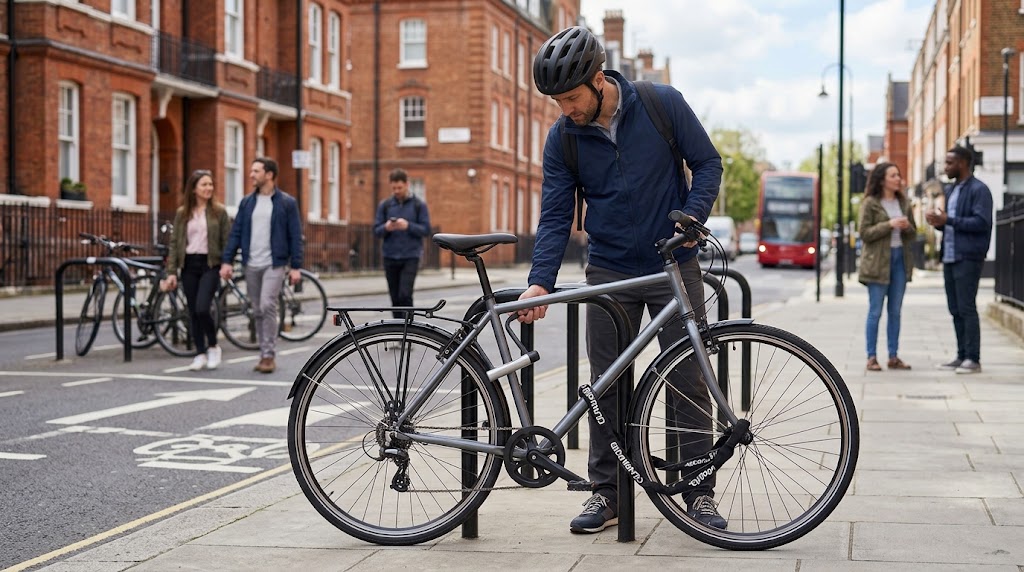
Use a suitable lock. Secure the frame. Choose a visible parking location. Take removable accessories with you. Record your bike’s details and never assume that “I’ll only be a minute” means you can leave it unsecured.
London is a fantastic city to explore by bike, and a few sensible precautions can help you keep riding with confidence. If you’re looking for advice on locks, bike security equipment, maintenance or choosing the right bike for your needs, Camden Cycles can help you find practical options suited to everyday cycling around London.