
Best Budget Bikes Under Different Price Ranges
Buying a bike does not have to mean spending a fortune. Whether you want a simple bike for short trips, a reliable commuter for getting to work, or something capable of longer weekend rides, there are good options at several different price points.
The trick is knowing what you actually need and where your money is best spent. A £200 bike and an £800 bike can both be useful, but they are designed with very different riders and purposes in mind. Current UK buying guides generally place around £400–£800 as a particularly useful range for dependable everyday commuter bikes, while the used market can offer even better value at lower prices.
So, what can you realistically expect from different budgets? Let’s break it down.
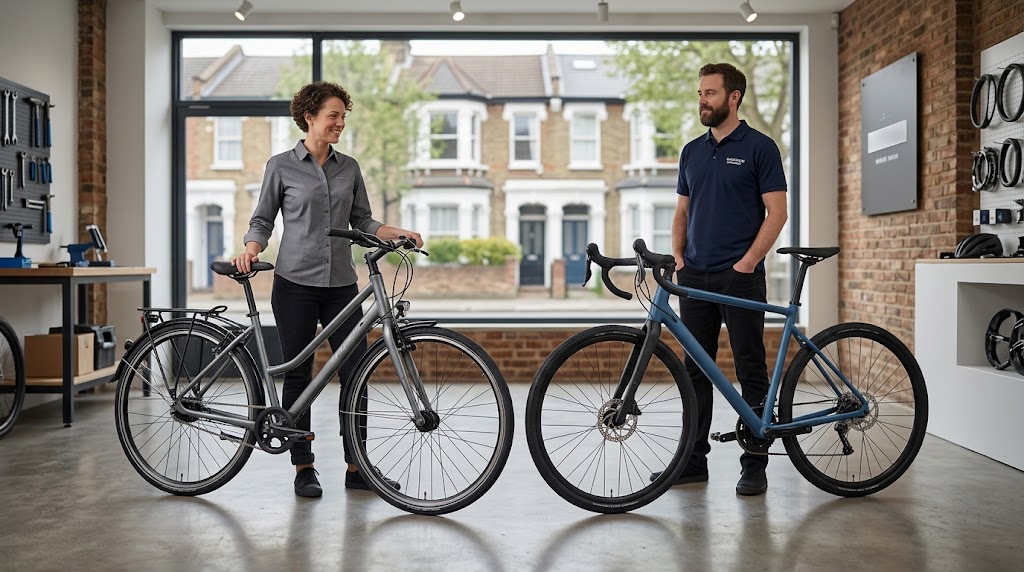
Under £200 – Simple Bikes for Everyday Trips
If your budget is below £200, you will need to keep your expectations realistic. At this level, the priority should be finding a straightforward, mechanically sound bike rather than chasing lots of gears or fancy components.
A used bike can be an excellent choice in this price range. You may find older models from established brands with decent frames and reliable components. A well-maintained second-hand hybrid, city bike or older mountain bike can sometimes offer considerably more value than buying a very basic new bike.
For short journeys around town, trips to the shops, casual rides and occasional cycling, a simple bike can do the job perfectly well.
Look for:
- A strong and undamaged frame
- Wheels that run straight
- Brakes that work properly
- Gears that change smoothly
- Tyres without major cracks or damage
- A comfortable riding position
Don’t be tempted simply by the lowest price. A bike that needs immediate repairs can quickly become more expensive than a better-maintained used option.
£200–£350 – The Sweet Spot for Basic Commuting
Moving into the £200–£350 range gives you more choice. This is where you can start finding practical hybrid bikes, city bikes, entry-level road bikes and better-quality used bicycles.
For someone commuting a few miles each day, a hybrid can be particularly useful. These bikes combine relatively efficient road performance with a comfortable riding position and tyres that can handle imperfect city surfaces.
At this price, you may find bikes with 7, 8 or more gears, aluminium frames and practical features such as mudguard or rack mounting points.
There are also some good new bikes available around this range. For example, Camden Cycles currently lists new bikes such as the Tiger TR50 at £279.99 and the Coyote Windsor Ladies Classic Bike at £230, showing that there are still practical choices for riders working with a modest budget.
This price range is ideal if you want a bike for:
- Short commutes
- Local journeys
- Shopping
- Leisure rides
- Canal paths and cycle routes
- General weekend cycling
£350–£500 – Better Components and More Versatility
Once your budget reaches £350–£500, the difference can become noticeable. You have access to better-quality bikes that are more suitable for regular use.
This is also a popular range for commuters. Current UK cycling guides suggest that spending around £400 or more can get you a bike that is much better suited to regular daily use.
At this level, look for an aluminium frame, dependable gearing, comfortable tyres and good brakes. Disc brakes are increasingly common, although the exact specification will depend on the model.
A good hybrid in this range can be a fantastic all-rounder. You can use it during the week for commuting and take it out for a longer ride at the weekend without feeling that you have bought a bike designed for only one purpose.
If you’re interested in road cycling, this is also around the point where entry-level road bikes and good-quality used road bikes become worth considering.
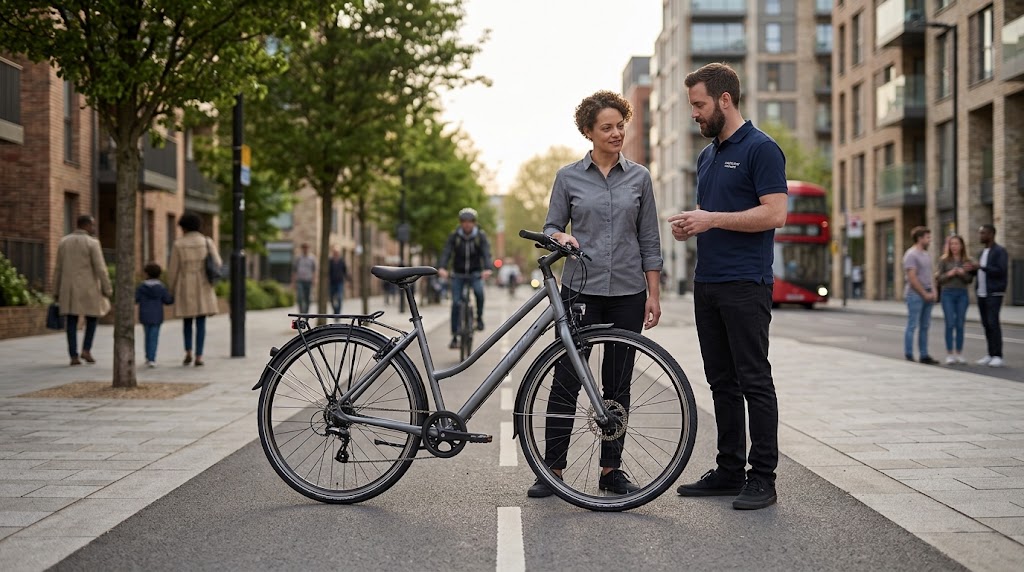
£500–£800 – The Best Range for Many Riders
For many cyclists, £500–£800 is where things become particularly interesting.
You can expect better frames, smoother gearing, stronger wheels and improved braking systems. Many hybrid bikes in this range are designed specifically around comfort and everyday reliability.
Modern budget hybrid bikes can offer features such as wider tyre clearance, disc brakes and mounting points for mudguards and racks. These details might sound small, but they make a significant difference when you’re riding through London traffic or dealing with wet weather.
This budget is especially suitable for someone who:
- Cycles to work regularly
- Wants to ride 10–30 miles at weekends
- Wants one bike for several purposes
- Needs dependable braking
- Wants better long-term durability
- Is starting to take cycling more seriously
You don’t necessarily need to spend £1,000 or more to get an enjoyable everyday bike. A well-chosen £600–£800 bike can provide years of useful riding.
£800–£1,200 – Serious Commuters and Enthusiastic Riders
At £800–£1,200, you are moving beyond basic budget cycling and into bikes that can handle considerably more demanding use.
This is where you will find higher-quality hybrids, better-equipped road bikes, gravel bikes and some excellent used premium models.
The extra money should not simply buy you a lighter frame or a more impressive-looking groupset. Look for improvements that you will actually notice while riding.
These can include:
- Hydraulic disc brakes
- Higher-quality drivetrains
- Lighter wheels
- Better tyres
- More comfortable geometry
- Improved finishing components
- Better-quality frames
If you are commuting every day, the investment can make sense. A bike that feels comfortable and dependable encourages you to ride more often.
For road cyclists, £1,000 is also around the point where the selection of capable entry-level road bikes becomes much stronger.
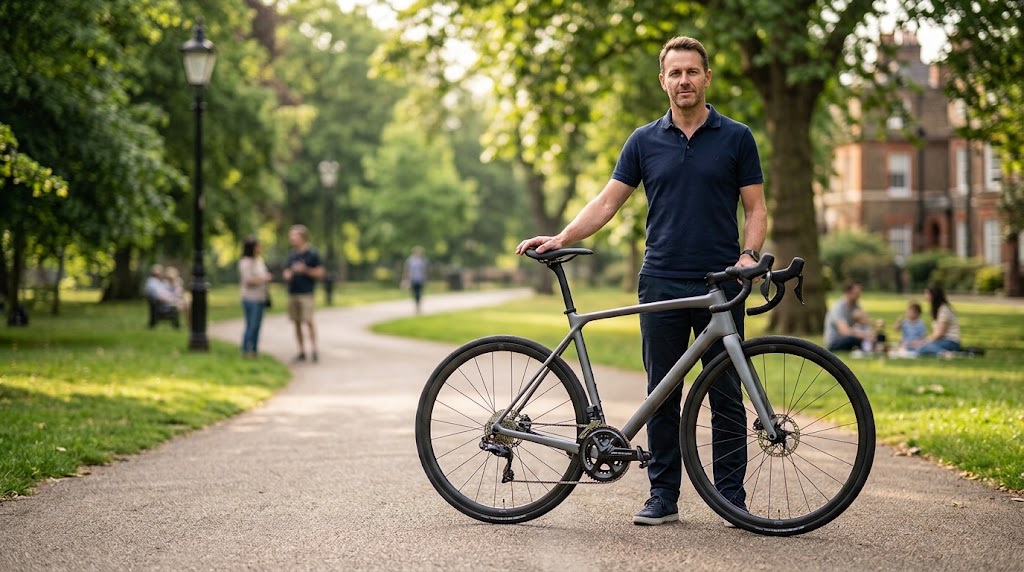
£1,200–£2,000 – Premium Bikes and Entry-Level E-Bikes
Once you move beyond £1,200, the definition of “budget” starts to change.
At this level, you can find excellent conventional bikes as well as entry-level electric bikes. For riders facing hills, longer commutes or regular headwinds, an e-bike can completely change the experience of cycling.
However, an e-bike needs to be judged differently from a standard bicycle. You are paying for the motor, battery, electronics and additional components, so the price naturally rises.
For a conventional bike, £1,200–£2,000 can buy a lightweight road bike, a capable gravel bike or a high-quality hybrid with excellent components.
For an e-bike, this range can provide a practical commuting machine with useful battery range and quality equipment. Current UK e-bike guides commonly place good commuter e-bikes around the £900–£1,200 starting point, with more advanced systems costing considerably more.
Don’t Forget the Used Bike Market
One of the best ways to get more bicycle for your money is to consider a used bike.
A £300 used bike is not necessarily comparable to a £300 new bike. You might find an older model that originally cost significantly more but has been maintained properly and is still in excellent condition.
Used road bikes, hybrids, mountain bikes and folding bikes can all offer excellent value.
The important thing is to inspect the bike carefully. Check the frame for cracks or serious damage, make sure the wheels are straight, test the brakes and run through every gear. If you’re not confident checking a bike yourself, having it inspected by a professional can save you from an expensive mistake.
The used market is particularly useful for riders who want a better brand or specification without stretching their budget.
Spend Money on the Things That Matter
Whatever your budget, don’t get distracted by features you will never use.
If you’re commuting around London, reliable brakes, comfortable tyres and practical mounting points may be more valuable than an ultra-light frame.
If you mainly ride on roads, you probably don’t need a heavy mountain bike with suspension designed for difficult trails.
Likewise, if your rides regularly include gravel paths and rough surfaces, an ultra-narrow road tyre may not be the best choice.
Think about where you ride, how often you ride and what you want the bike to do.
For city riding, tyres around 32–40mm can provide a useful balance between efficiency and comfort on rougher roads, while wider tyre clearance can add versatility.
What About Accessories?
Remember that the bike isn’t the only expense.
A decent lock is essential if you’re leaving your bike outside work or shops. Depending on your riding, you may also want lights, mudguards, a rear rack, panniers, a helmet and a basic repair kit.
Some bikes include mudguard and rack mounts, which can save money later.
It is therefore worth leaving some money in your budget for these essentials rather than spending every penny on the bike itself.
A £500 bike with the right accessories can be much more useful than a £600 bike with nothing else.
Choose the Bike, Not Just the Price
There is no single “best budget bike” because every rider has different needs.
Someone spending £200 may be perfectly happy with a simple used hybrid. Another cyclist may need an £800 bike because they ride 60 miles every week. Someone else may decide that an e-bike around £1,500 is worth the extra cost because it makes a long, hilly commute manageable.
The important thing is to buy according to your riding rather than simply buying the most expensive bike you can afford.
Before making a decision, think about your usual distance, the roads or trails you use, how frequently you ride and whether you need to carry bags or other equipment.
Most importantly, make sure the bike fits you properly. A correctly sized £400 bike will usually be far more enjoyable than an expensive bike that doesn’t suit your body or riding position.
Final Thoughts
You don’t need a huge budget to get into cycling. Under £200, the used market can provide simple and useful bikes. Around £200–£350, you can find practical options for everyday trips. Between £350 and £800, the choice becomes much wider, with plenty of dependable hybrids and commuter bikes. Above £800, you can start looking at higher-quality road, gravel and premium hybrid bikes, while £1,200 and beyond opens the door to more sophisticated bikes and electric options.
If you’re shopping for a budget-friendly bike in London, taking time to compare new and used options can make a big difference. Camden Cycles offers a range of new and used bicycles across different categories and price points, making it worth exploring their selection if you’re looking for a bike that fits both your riding needs and your budget.
The best bike isn’t necessarily the cheapest or the most expensive one. It’s the one that gets you excited to ride, suits your everyday journeys and gives you good value every time you get in the saddle.