
Disc Brakes vs Rim Brakes: Which Is Best for City Cycling?
Choosing the right bicycle involves more than finding a frame that fits or selecting the right gears. Your braking system is equally important, especially when cycling through busy London streets, dealing with sudden stops or riding in wet weather.
Two of the most common braking systems are disc brakes and rim brakes. Both can provide reliable stopping power, but they work differently and have their own advantages and disadvantages.
If you are buying a new bicycle, considering a second-hand bike or thinking about upgrading your current setup, understanding these differences can help you make a more informed decision.
In this guide, Camden Cycles explains how disc brakes and rim brakes work, how they compare for everyday city cycling and which option may suit your needs best.
What Are Disc Brakes?
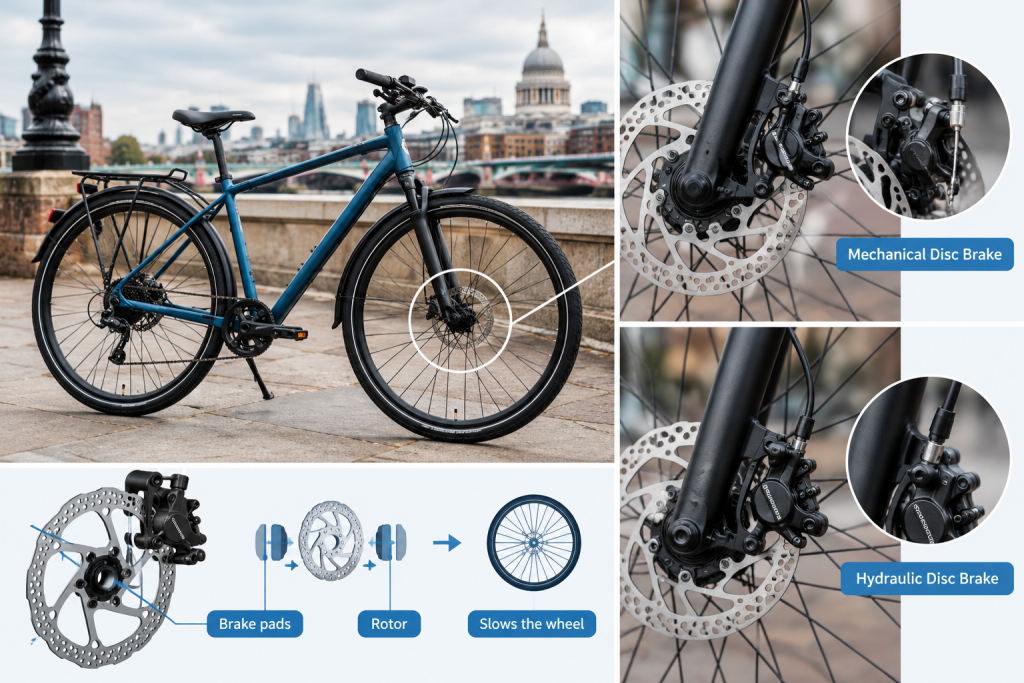
Disc brakes work by using brake pads to grip a metal rotor attached to the bicycle’s wheel hub. When you pull the brake lever, the pads press against the rotor, slowing the wheel down.
There are two main types of bicycle disc brakes:
Mechanical disc brakes: These use a cable to activate the brake calliper.
Hydraulic disc brakes: These use hydraulic fluid to transfer force from the brake lever to the calliper.
Mechanical disc brakes are often found on affordable commuter and hybrid bikes. Hydraulic systems are common on many mountain bikes, higher-specification hybrids and some road bikes.
One of the main advantages of disc brakes is that the braking surface is separate from the wheel rim. This can be particularly useful when riding in wet or muddy conditions.
What Are Rim Brakes?
Rim brakes slow the bicycle by pressing brake pads directly against the wheel rim. When you squeeze the brake lever, the pads grip the rim and create friction, reducing the wheel’s speed.
Common rim brake designs include:
Caliper brakes: Frequently found on traditional road bikes.
V-brakes: Common on hybrid bikes, mountain bikes and some everyday bicycles.
Cantilever brakes: Found on certain older bicycles and some touring or cyclocross models.
Rim brakes have been used on bicycles for many years and remain a practical choice for many riders. They are generally straightforward to maintain, and replacement pads are often inexpensive and widely available.
For everyday journeys on relatively dry, paved roads, a well-maintained rim brake system can offer dependable performance.
Disc Brakes vs Rim Brakes: The Main Differences
Although both systems are designed to slow and stop your bicycle, their performance and maintenance requirements differ.
1. Braking Performance in Wet Weather
London’s weather can change quickly, and cyclists regularly encounter rain, puddles and damp roads. Your brakes need to perform consistently when conditions are less than ideal.
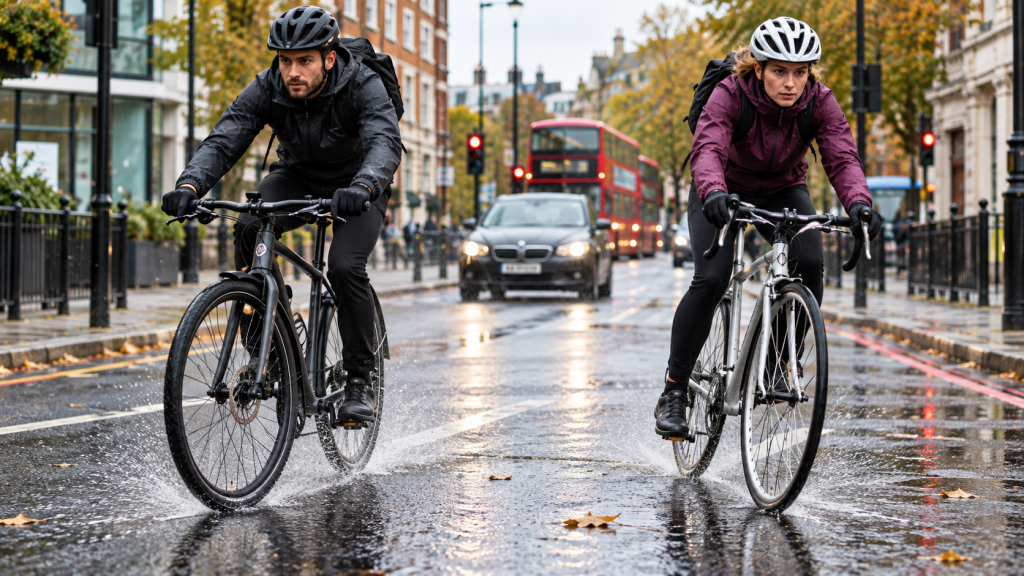
Disc brakes generally perform better in wet conditions because the rotor is positioned away from the tyre and much of the road spray that reaches the rim. They can offer more consistent braking in rain, although water, dirt and contaminated pads can still affect performance.
Rim brakes can also work well in the wet, but water and road grime on the rim may reduce initial braking effectiveness. Depending on the brake design and conditions, it may take longer for the pads to clear water from the braking surface.
Which is better? Disc brakes generally have the advantage for year-round city cycling, particularly for riders who regularly commute in wet weather.
2. Stopping Power and Control
Both disc brakes and rim brakes can stop a bicycle effectively when correctly installed, adjusted and maintained. However, the experience can differ depending on the system and the conditions.
Hydraulic disc brakes usually provide strong braking with relatively little effort at the lever. They also allow riders to control braking force smoothly, which can be helpful when approaching junctions or slowing down in traffic.
Mechanical disc brakes can provide good performance too, although their feel and power depend on the quality of the components and how well the cables and callipers are adjusted.
Rim brakes can offer plenty of stopping power, particularly on lightweight road bikes and bicycles used in dry conditions. Their performance depends on pad quality, rim condition and correct adjustment.
Remember that stopping distance also depends on speed, tyres, road surface, bicycle load and rider technique. No braking system can compensate completely for poor road conditions or unsafe riding.
3. Maintenance and Repairs
Maintenance is an important consideration if you use your bicycle every day.
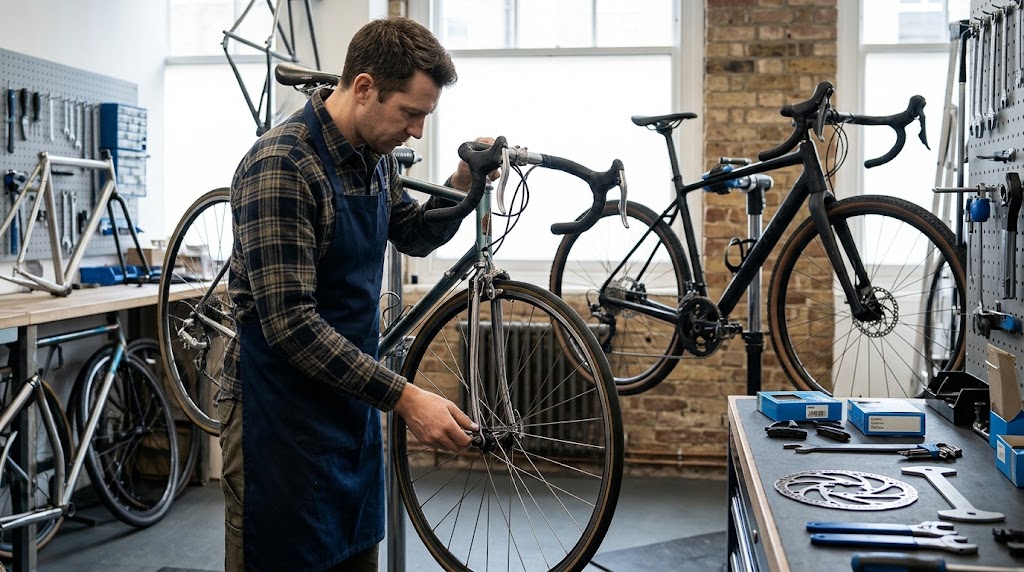
Rim brakes are generally simple to inspect and adjust. Replacing worn pads is usually straightforward, and many basic repairs can be carried out with ordinary bicycle tools. However, rims can gradually wear down because they form part of the braking surface.
Disc brakes also require regular checks. You need to inspect the pads and rotors for wear, keep the braking surfaces free from contamination and ensure the callipers are properly aligned.
Mechanical disc brakes may need cable adjustments as the pads wear. Hydraulic disc brakes can require specialist servicing, including occasional bleeding when air enters the system or the manufacturer recommends it.
Which is easier to maintain? Rim brakes often have the advantage for simple, low-cost maintenance. Mechanical disc brakes can also be relatively easy to service, while hydraulic systems may require more specialised tools and knowledge.
4. Cost and Replacement Parts
If you are working within a budget, the cost of maintaining your bicycle is worth considering alongside its purchase price.
Rim brake systems are often cheaper to manufacture and maintain. Replacement pads are usually affordable, and many independent cycle shops stock compatible parts.
Disc brake bicycles may cost more initially, particularly models fitted with hydraulic brakes. Replacement pads and rotors add to the potential maintenance costs, although prices vary considerably between brands and components.
It is also worth considering the condition of a second-hand bicycle. A bike with worn rims, damaged rotors or neglected brakes may require repairs before it is safe to ride.
Rather than choosing solely on price, consider the bicycle’s overall condition, how often you ride and the type of maintenance you are comfortable performing.
5. Weight and Everyday Practicality
Rim brakes are generally lighter than comparable disc brake systems. This can be an advantage for riders who prioritise a lightweight bicycle for fitness riding or longer road journeys.
Disc brake systems add components such as rotors and callipers. However, the weight difference varies depending on the bicycle and equipment fitted.
For many city commuters, weight may be less important than dependable braking, comfort, security and the ability to carry everyday belongings.
If you regularly carry shopping, a laptop or other heavy items, remember that the extra load affects how your bicycle handles and stops. Choose a braking system that suits your bike, and allow extra stopping distance when riding with luggage.
Which Brakes Are Best for London City Cycling?
The best choice depends on your route, riding habits, budget and maintenance preferences.
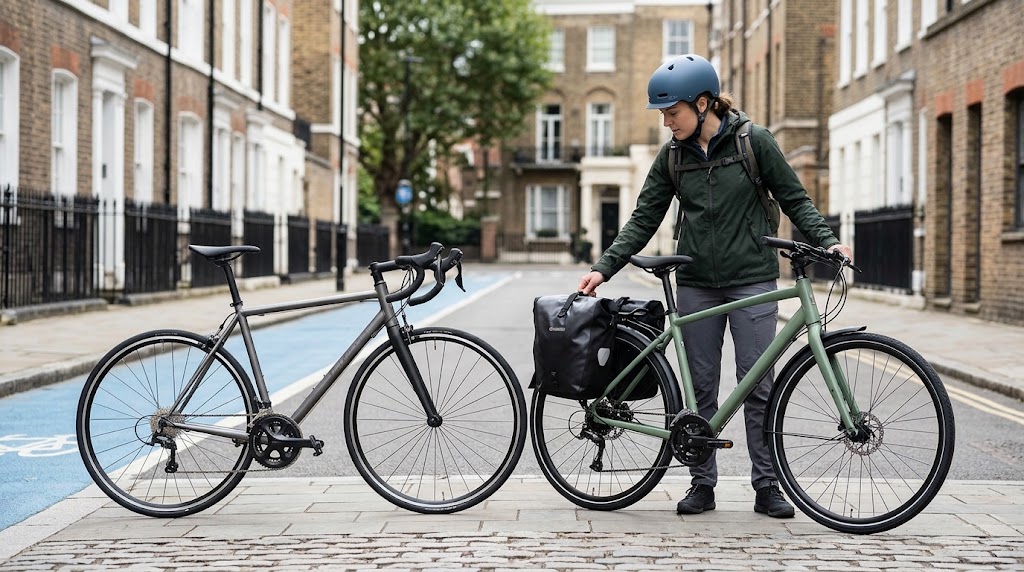
Disc Brakes May Suit You If:
You cycle throughout the year, including in wet weather.
Your commute involves frequent stops and starts.
You prefer the braking feel of a hydraulic system.
You ride a hybrid, mountain bike or commuter bicycle designed for disc brakes.
You regularly travel on routes where dependable braking in changing conditions is a priority.
Rim Brakes May Suit You If:
You mainly ride on paved roads in relatively dry conditions.
You want a bicycle with a straightforward braking system.
You prefer lower-cost replacement parts and simple adjustments.
You are buying a suitable budget or second-hand bicycle.
Your current rim brakes are in good condition and meet your riding needs.
Neither system is automatically the right choice for every cyclist. A well-maintained rim brake bicycle can be a sensible commuter, while a poorly maintained disc brake bicycle may perform badly. Condition and correct adjustment matter enormously.
How to Check Your Bicycle Brakes
Regardless of which system your bicycle uses, regular inspections can help identify problems before they become serious.
Before riding, check that:
The brake levers feel firm and do not pull all the way to the handlebars.
The pads have sufficient material remaining.
The wheels rotate freely when the brakes are released.
The brake callipers are secure and correctly aligned.
There are no unusual grinding noises, severe rubbing or visible damage.
The brakes slow the bicycle smoothly during a cautious test in a safe area.
For rim brakes, also inspect the wheel rims for excessive wear or damage. For disc brakes, check the rotors and avoid touching braking surfaces with oily hands.
If the brakes feel weak, make unusual noises or show signs of damage, have them inspected by a qualified bicycle mechanic before continuing to ride.
Should You Upgrade from Rim Brakes to Disc Brakes?
If your current bicycle uses rim brakes, upgrading to disc brakes may not be as simple as replacing the callipers.
Disc brake bicycles need compatible frames and forks, suitable wheel hubs, rotor mounts and appropriate brake components. Not every bicycle can safely or economically be converted.
In many cases, maintaining your existing brakes or choosing a different bicycle designed for disc brakes may be the more practical option.
If you are considering an upgrade, ask a cycle mechanic to assess compatibility and compare the likely cost with the price of a suitable replacement bicycle.
Final Verdict: Disc Brakes or Rim Brakes?
For many London commuters who cycle in all seasons, disc brakes are an attractive option because of their generally consistent performance in wet conditions and the availability of hydraulic systems offering strong, controlled braking.
Rim brakes remain a sensible choice for riders who want a straightforward, affordable system and mainly ride in dry conditions. They can provide reliable stopping power when properly maintained.
Ultimately, choose a bicycle that suits your route, budget and riding style. Check the condition of the brakes carefully, keep them maintained and practise smooth braking so you can ride with greater confidence.
If you need help choosing a commuter bicycle or checking your current brakes, visit Camden Cycles for practical advice on finding a bike that suits your everyday journeys around London.