
7 Common Mistakes New London Cyclists Make
Cycling in London can be one of the easiest ways to get around the city. You can avoid some of the traffic, enjoy a bit of fresh air and often reach your destination without relying on public transport. But if you are new to cycling in London, the first few rides can feel very different from riding around a quiet neighbourhood or park.
Busy junctions, buses, parked cars, pedestrians, traffic lights and constantly changing road conditions all require you to pay attention. Many new cyclists make simple mistakes during their first few weeks, not because they are careless, but because they have not yet become familiar with cycling in a busy city.
The good news is that most of these mistakes are easy to avoid. With a little preparation and some extra awareness, you can make your daily rides smoother, more comfortable and more enjoyable.
1. Choosing a Route Based Only on Distance
One of the biggest mistakes new London cyclists make is choosing the shortest route without considering what the journey is actually like.
A route that is three miles long is not necessarily better than a four-mile route. The shorter option might include several busy junctions, complicated roundabouts, steep climbs or roads with heavy traffic. A slightly longer route may be quieter and much more comfortable to ride.
Before setting off, look at the route rather than simply checking the distance. Consider quieter streets, cycle routes, parks and roads where you feel comfortable maintaining your position.
After a few rides, you will start to learn which roads work best for you. Your favourite cycling route may not be the one that looks shortest on a map.
2. Not Checking the Bike Before Leaving
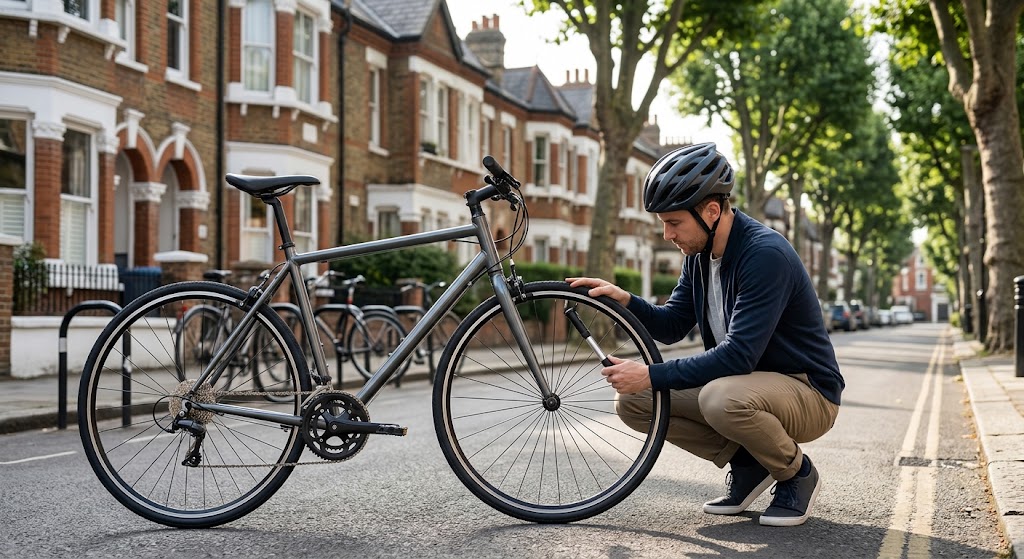
It is easy to jump on your bike and start riding without checking anything. However, spending two minutes looking over your bicycle before a journey can help prevent problems later.
Check that both tyres have enough air and look for obvious cuts or damage. Test the brakes and make sure the wheels appear secure. If your bike has gears, shift through a few of them to make sure everything feels normal.
Also take a quick look at the chain. If it is extremely dry, rusty or covered in dirt, it may need some attention.
These checks become particularly important before longer journeys. Discovering a problem with your bike halfway through a commute is much less convenient than finding it at home.
3. Riding Too Close to Parked Cars
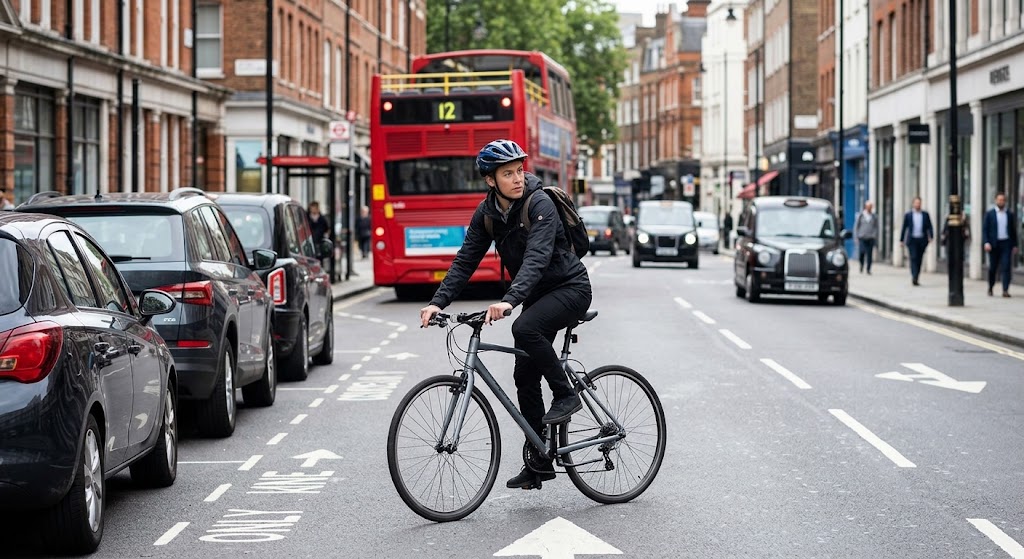
New cyclists sometimes ride extremely close to parked vehicles because they are worried about moving traffic.
The problem is that a parked car can suddenly become a hazard. Someone may open a door without noticing a cyclist approaching. A vehicle may also pull away unexpectedly.
Give parked cars enough space whenever possible, particularly where doors could open into your path. Keep looking ahead rather than focusing only on the vehicle directly beside you.
You should also pay attention to gaps between parked cars. A pedestrian could step into the road, or another vehicle could move out of a parking space.
Being aware of what might happen next is an important part of becoming a confident city cyclist.
4. Forgetting to Look Behind Before Moving
Another common mistake is changing position without properly checking what is happening behind you.
You may need to move around a parked car, avoid an obstacle or position yourself differently before a junction. Before moving, look over your shoulder when it is safe to do so and make your intention clear.
You should not rely entirely on a quick glance. Keep observing the road around you and avoid making sudden movements.
It takes practice to combine looking ahead, checking behind and maintaining control of the bicycle. Once it becomes a habit, it feels much more natural.
5. Using the Wrong Gear
London is not completely flat, and even a route that seems easy can include short climbs, bridges and repeated stops.
Some beginners stay in one gear for most of their journey and then struggle when they reach a hill. Others use a gear that is too easy and end up spinning their legs without making much progress.
Try changing gear before you reach a hill rather than waiting until you are already struggling. On flatter sections, choose a gear that allows you to pedal comfortably without constantly pushing extremely hard.
Good gear selection is not about using the hardest gear possible. It is about finding a comfortable rhythm that matches the road.
6. Ignoring Lights and Visibility
Being visible matters, particularly when cycling early in the morning, during darker evenings or in poor weather.
Some new cyclists think lights are only necessary at night. In reality, visibility can also be reduced by rain, fog, heavy traffic and poor weather conditions.
Make sure your lights are working before leaving home. Keep them charged or carry suitable spare batteries where appropriate.
Reflective clothing or accessories can also make you easier to notice. You do not need to cover yourself from head to toe in reflective material, but being visible should always be part of your cycling routine.
Also remember that visibility is about more than lights. Positioning yourself where other road users can see you clearly and making your movements predictable can help you communicate your intentions.
7. Carrying Too Much or Nothing at All
New cyclists often fall into one of two extremes. They either carry almost nothing and then discover they need something halfway through the journey, or they load themselves down with far more equipment than necessary.
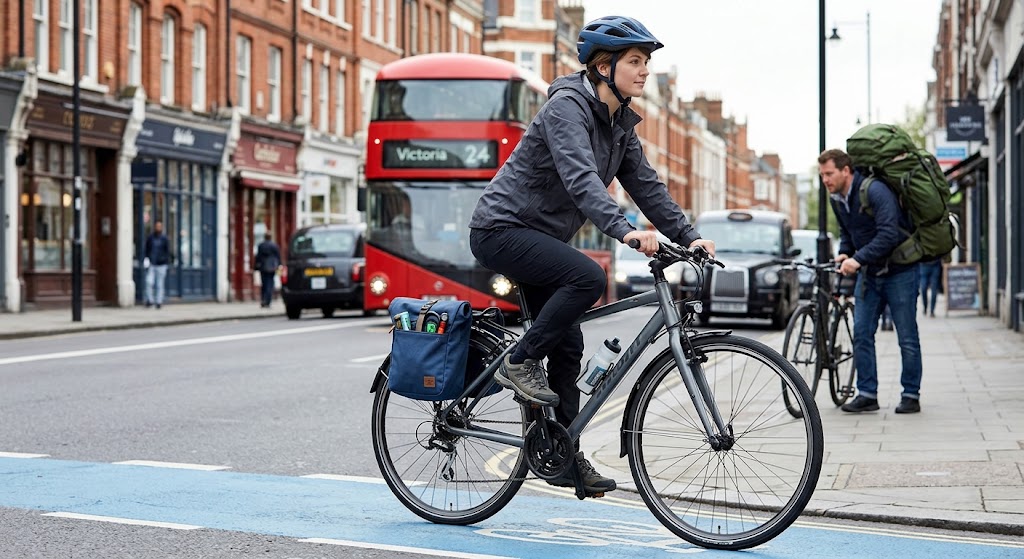
For a daily London commute, a few useful items can make a big difference. Depending on your journey, you might carry a lock, lights, a pump, spare inner tube, tyre levers, basic tools, water and a phone.
If you regularly ride longer distances, you may also want to carry a small puncture repair kit.
Try to keep your setup practical. A huge backpack filled with unnecessary items can make cycling less comfortable, while leaving home without basic equipment can turn a small problem into a major inconvenience.
Plan for the Weather
London weather can change quickly, so checking the forecast before your journey is a useful habit.
Rain can affect visibility, braking and road grip. Strong winds can make exposed roads and bridges more difficult. During colder months, darker mornings and evenings mean that visibility becomes even more important.
You do not have to stop cycling whenever the weather changes, but you should adapt your equipment and riding style.
Mudguards can help keep spray off your clothes, while suitable waterproof clothing can make wet journeys much more comfortable.
Give Yourself More Time
Another mistake is planning a cycling journey as though you already know exactly how long it will take.
When you are new to cycling, you may need extra time to find the right route, stop at traffic lights, deal with busy junctions or simply get comfortable on the bike.
Give yourself some extra time, especially during your first few commuting journeys. Once you become familiar with the route, you will have a better idea of how long the journey normally takes.
Rushing is rarely helpful. A relaxed cyclist has more time to observe the road and make sensible decisions.
Learn From Every Ride
You do not need to become an experienced London cyclist overnight.
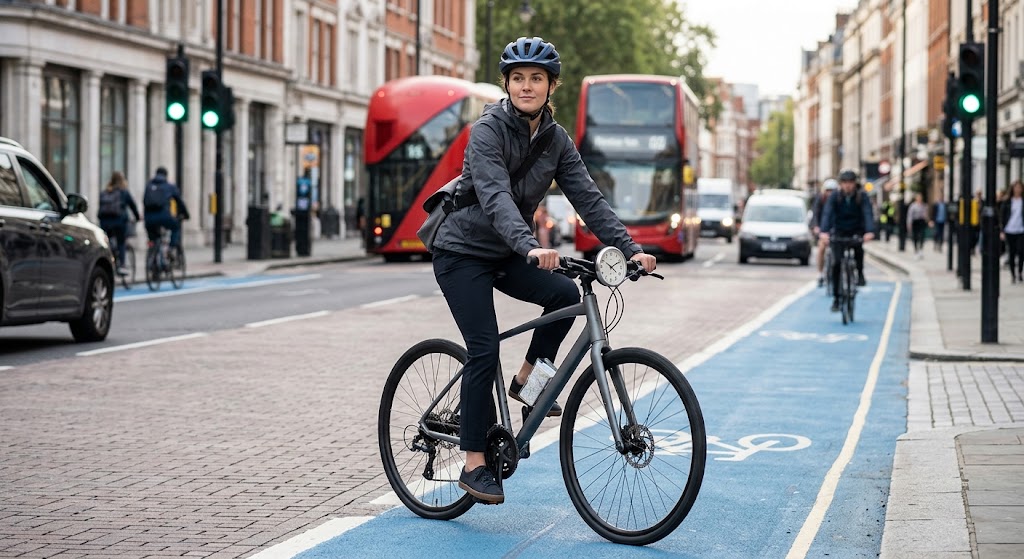
Every journey gives you a chance to learn something. You may discover a quieter road, find a better place to cross a busy junction or realise that your tyre pressure needs checking more regularly.
If something about your ride feels uncomfortable, think about why. Perhaps the saddle needs adjusting, your route could be improved, or the bike itself needs maintenance.
Small improvements made over time can completely change how enjoyable cycling feels.
Final Thoughts
Cycling in London becomes much easier when you stop trying to rush the learning process. Choosing sensible routes, checking your bike, staying visible, paying attention to parked cars and using your gears properly are all simple habits that can make a big difference. You will gradually become more familiar with the roads and more comfortable handling different situations. If your bicycle needs a service, repair, adjustment or a few useful upgrades before you start commuting regularly, Camden Cycles can help you get your bike ready for everyday cycling around London.