
The Complete London Cycling Commuter Checklist
Cycling to work in London can completely change the way you experience the city. Instead of sitting in traffic or squeezing onto a crowded train, you can move through the streets at your own pace, get some exercise and start your working day feeling refreshed.
But a good commute is about more than simply getting on your bike and riding to work. London traffic, changing weather, potholes, busy junctions, cycle lanes and early mornings all require a little preparation.
The good news is that you do not need a huge amount of equipment. With the right bike, a few useful accessories and some simple habits, your daily commute can become much easier.
Here is a practical checklist to help you prepare.
1. Start With a Reliable Bicycle
Your bicycle is the most important part of your commuting setup. It does not have to be expensive, but it should be suitable for the type of roads and distances you ride.
Before leaving home, check that the tyres have enough air, the brakes work properly and the gears shift smoothly. A quick inspection takes only a couple of minutes and can prevent an inconvenient problem halfway to work.
For many London commuters, a hybrid or commuter bike is a practical choice because it offers a comfortable riding position while still being efficient on the road. A road bike can be useful for longer distances, while a folding bike can be convenient if your journey involves public transport.
TfL also recommends checking that your cycle is roadworthy before setting off
2. Check Your Tyres and Brakes
A flat tyre is one of the most common problems a commuter can face.
Before your morning journey, give both tyres a quick squeeze. If they feel noticeably softer than usual, check the recommended pressure printed on the tyre sidewall and inflate them appropriately.
Your brakes deserve the same attention. Pull both brake levers before riding and make sure they feel firm. If the lever comes unusually close to the handlebar or the bike takes longer to stop, it may be time for maintenance.
Also look at the tyres for cuts, cracks, worn tread or anything stuck in the rubber.
These small checks are particularly useful when cycling every day because wear can develop gradually without being obvious.
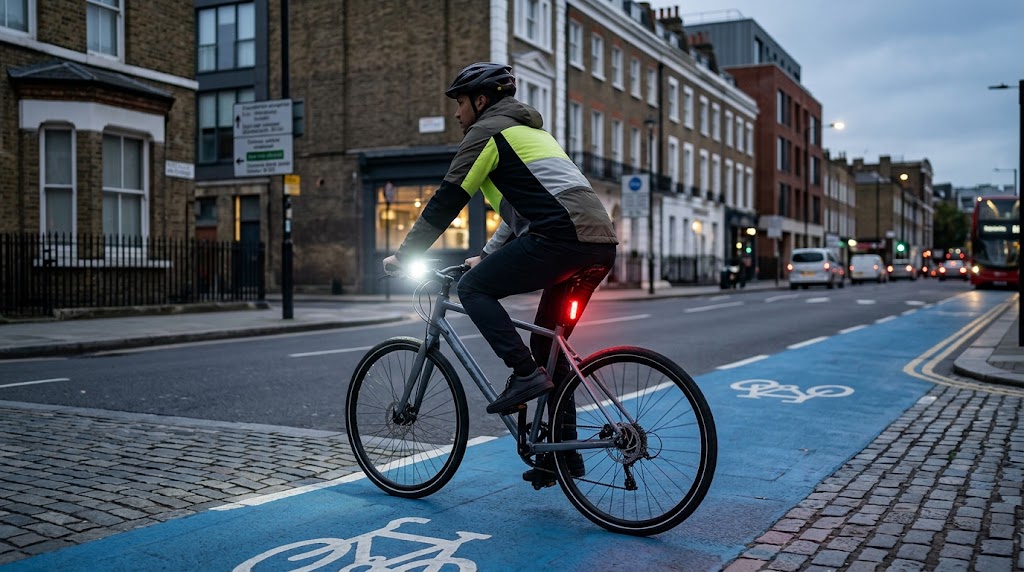
3. Never Leave Home Without Bike Lights
London commutes do not always happen in bright daylight. Winter mornings, dark evenings, rain and poor visibility can make cyclists much harder to see.
Keep a white front light and red rear light on your bicycle. Make sure both are charged before leaving home.
TfL advises cyclists to use lights after dark and notes that lights should provide enough visibility without dazzling other road users.
It is also worth carrying a backup light or keeping spare batteries if your lights use replaceable cells. A long working day, unexpected delay or change in weather can turn a daylight journey home into a night ride.
4. Wear a Properly Fitted Helmet
A helmet is not a substitute for safe riding, but many cyclists choose to wear one for additional head protection.
If you wear a helmet, make sure it fits properly and sits securely on your head. It should not move around excessively when you ride.
TfL advises cyclists to consider wearing a helmet and also recommends suitable visibility clothing and accessories, particularly in darker conditions.
Comfort matters too. A helmet that feels uncomfortable after ten minutes is unlikely to be enjoyable on a longer commute.
5. Keep a Compact Repair Kit
You do not need a full workshop in your backpack.
A small commuting repair kit can include:
- Mini bicycle pump
- Spare inner tube
- Tyre levers
- Multi-tool
- Puncture repair kit
- Small chain lubricant
- Disposable gloves
Even if you do not know how to repair every problem yourself, carrying basic tools can be extremely useful.
A puncture several miles from home is much less stressful when you have the equipment needed to deal with it.
6. Carry a Strong Bike Lock
London has plenty of places to park a bicycle, but choosing a secure location and locking your bike correctly are important parts of commuting.
When parking, use a secure cycle stand or another suitable fixed structure. Lock the frame and wheels where possible rather than securing only one part of the bicycle.
TfL’s cycling guidance recommends locking both wheels and the frame and checking that the structure you are using is secure
If you regularly leave your bike outside work, consider carrying a lock that provides a sensible balance between security and weight.
7. Plan Your Route Before You Ride
The quickest route by car is not necessarily the best route by bicycle.
A slightly longer road with quieter streets and dedicated cycling infrastructure can make your commute more comfortable. TfL provides cycling maps and route information, including Cycleways across London. Before starting a new commute, look at:
- Cycleways
- Quieter roads
- Busy junctions
- Steep sections
- Cycle parking
- Roadworks
- Alternative routes
It is also worth practising a new route at the weekend when you are not under pressure to arrive at work on time.
8. Learn the Rules of the Road
Being familiar with the Highway Code is essential when cycling in London.
Stop at red traffic lights, follow signs and markings, give way where required and avoid cycling on pavements unless a route is specifically designated for cycling.
TfL also recommends staying clear of parked cars, particularly because of the risk of doors opening unexpectedly. On narrow roads, positioning yourself appropriately can help prevent unsafe overtaking
Large vehicles deserve particular attention. Keep a safe distance from HGVs and buses, especially around junctions where visibility can be limited.
9. Make Yourself Visible
Being seen is especially important during dark mornings, evenings and poor weather.
Bright or reflective clothing can help other road users notice you. Reflective accessories can be particularly useful when daylight disappears during the journey home.
You do not need to dress like a professional cyclist. A simple reflective jacket, vest, bag cover or ankle bands can make practical additions to your commuting kit.
Remember that visibility is not only about clothing. Correctly positioned lights and sensible road positioning are equally important.
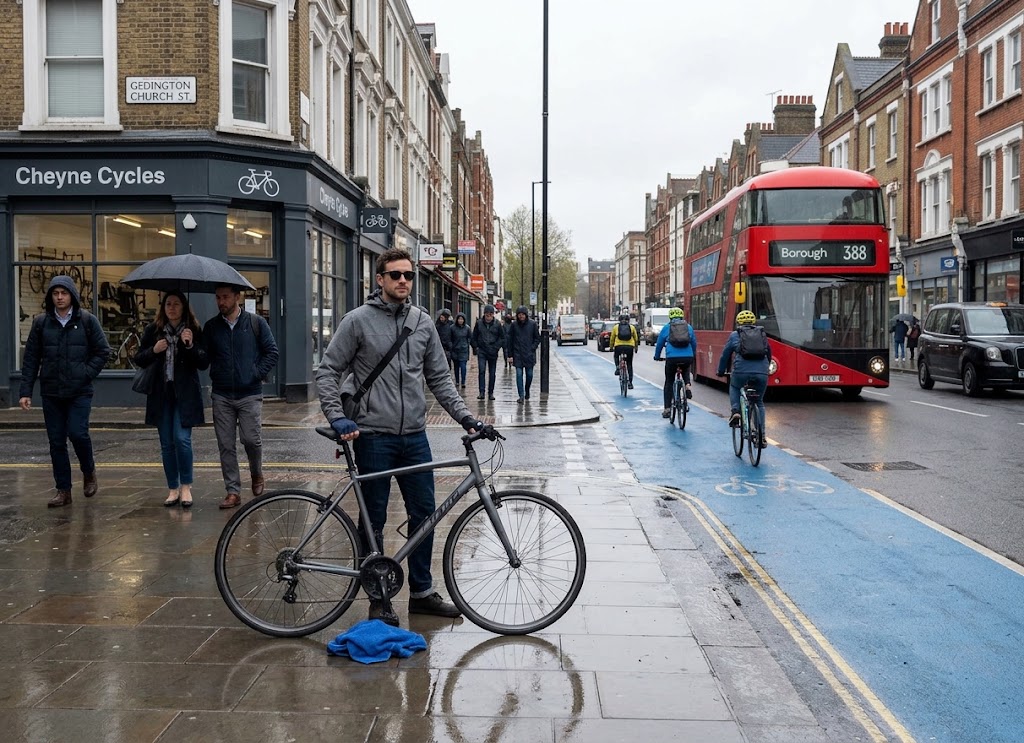
10. Prepare for London’s Weather
The weather can change quickly, so a commuter bag should have some room for weather protection.
Depending on the season, consider carrying:
- Lightweight waterproof jacket
- Waterproof trousers
- Gloves
- Sunglasses
- Spare socks
- Small towel
- Dry change of clothes
Rain also affects the way your bike handles. Wet roads can increase stopping distances, while puddles may hide potholes or other hazards.
TfL recommends taking care in wet weather and planning clothing around the conditions.
11. Think About Your Work Clothes
Arriving at work soaked or covered in sweat is not an ideal start to the day.
If possible, keep a few basic items at work, such as a spare shirt, socks or even a complete change of clothes.
Some commuters carry their work clothes in a backpack, while others leave them at the office for several days.
A rear pannier or suitable cycle bag can also make commuting more comfortable because it allows you to carry clothing, lunch and other essentials without putting everything directly on your back.
12. Carry Water and Food
Even a relatively short commute can leave you thirsty, particularly during warmer weather.
A reusable water bottle mounted securely to the bike is an easy solution. For longer journeys, keep a small snack in your bag as well.
A banana, cereal bar or similar quick snack can be useful if your commute is followed by a busy morning at work.
The goal is not to turn your commute into a training session. It is simply about making sure you arrive feeling comfortable and prepared.
13. Keep Your Phone Charged
Your phone can be useful for navigation, emergency calls and checking transport information.
However, do not use it while riding. TfL specifically advises cyclists not to use mobile phones or headphones while cycling because attention needs to remain on the road and surrounding traffic.
If you use your phone for navigation, set your route before starting or use a suitable handlebar-mounted navigation setup that allows you to glance at directions safely.
A small power bank can also be useful if you have a long journey.
14. Give Your Bike a Quick Check Every Morning
You do not need to inspect every component before every ride.
A simple 30-second check is enough for most mornings:
Tyres — Do they look properly inflated?
Brakes — Do both brakes feel normal?
Chain — Is it excessively dry, dirty or noisy?
Wheels — Do they look secure and straight?
Lights — Are they working?
Lock — Did you remember to bring it?
This simple routine can become automatic after a few weeks.
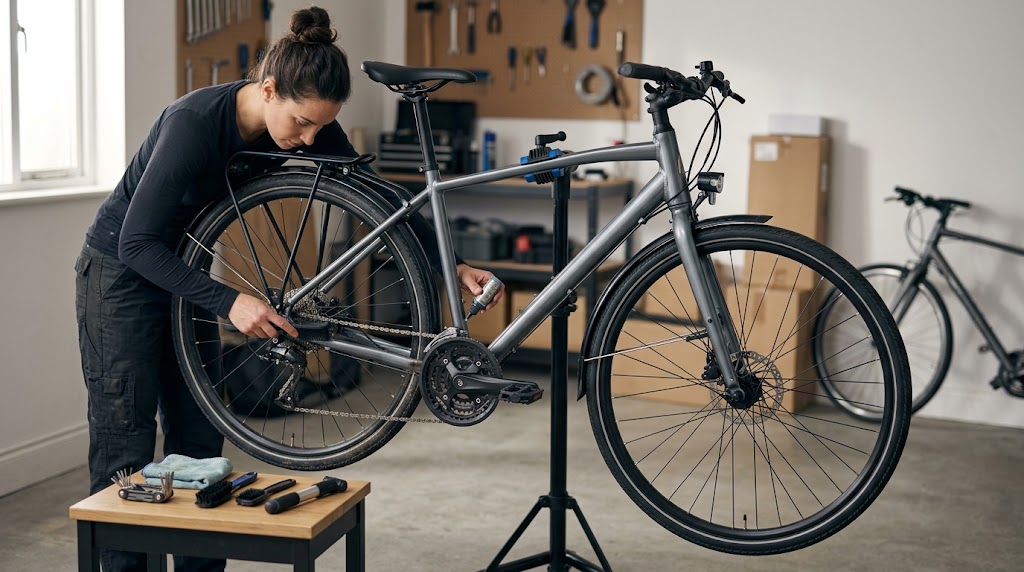
15. Keep Your Bike Maintained
Daily commuting puts more mileage on a bicycle than occasional weekend riding.
Rain, road dirt and grit can work their way into the drivetrain and other components. Clean the bike regularly, keep the chain appropriately lubricated and deal with unusual noises or shifting problems before they become bigger issues.
If your bike is used heavily throughout the year, regular servicing can help identify worn components before they fail during a commute.
A few minutes of maintenance at home can save a much longer walk home later.
16. Give Yourself Extra Time
One of the biggest mistakes new commuters make is planning a journey as if everything will go perfectly.
There may be roadworks, traffic, a closed cycle lane, a puncture or simply a slower section of road than expected.
Give yourself some extra time, especially when you are learning a new route.
Once you know your normal journey time, you can adjust your schedule. The aim is to arrive at work without feeling that you have spent the entire journey racing the clock.
17. Keep an Emergency Plan
Even with good preparation, something can occasionally go wrong.
Save your workplace address and emergency contacts on your phone. Know where you can stop safely along your route and have an alternative way of getting home if your bicycle becomes unusable.
It is also useful to know where public transport connections are located near your regular route. TfL provides information about cycling and public transport options, including where cycles can be taken and cycle parking locations
Your London Cycling Commuter Checklist
Before leaving home, run through this quick list:
Bike
- Tyres inflated
- Brakes working
- Gears shifting correctly
- Chain reasonably clean and lubricated
- Wheels secure
Safety
- Helmet fitted correctly
- Front and rear lights working
- Reflective clothing or accessories available
- Lock packed
Repair Kit
- Pump
- Inner tube
- Tyre levers
- Multi-tool
- Puncture repair kit
Personal Items
- Phone
- Water bottle
- Work clothes
- Waterproof layer
- Wallet and keys
- Lunch or snack
Journey
- Route checked
- Weather checked
- Extra time allowed
- Alternative route considered
Final Thoughts
A successful London cycling commute does not depend on having the most expensive bicycle or a backpack full of specialist equipment. It comes down to preparation, awareness and consistency.
Check your bike, plan your route, use appropriate lights, carry basic repair equipment and allow yourself enough time to ride without unnecessary pressure. Over time, these small habits become part of your normal routine.
London already has an expanding network of Cycleways and route-planning resources, making it easier to explore different ways of getting around the city. If you are looking for a suitable bicycle, commuting accessories, locks, lights, maintenance products or other cycling essentials, Camden Cycles can help you find practical equipment for everyday cycling and make your London commute more comfortable and prepared.