
Everything You Need to Know About Bike Tubes
If you have ever had a flat tyre while riding through London, you will know how quickly a small puncture can turn a good ride into an unwanted walk. While tyres get most of the attention, the inner tube inside them is just as important. A good-quality tube helps your bike roll smoothly, holds the correct air pressure and keeps you moving comfortably.
Bike tubes are simple components, but choosing the right one can sometimes be confusing. There are different sizes, valve types, materials and designs, and using the wrong tube can cause problems. Whether you are a new cyclist, a daily commuter or someone who enjoys weekend rides, understanding your inner tubes can save you time, money and plenty of frustration.
Here is everything you need to know about bike tubes, from choosing the correct size to dealing with punctures.
What Is a Bike Tube?
A bike inner tube is an inflatable rubber or synthetic tube fitted inside a traditional pneumatic bicycle tyre. Its main job is to hold the air that supports the rider and bike.
When you pump air into the tube, it expands and presses against the inside of the tyre. The tyre then provides the outer protection and contact with the road, while the inner tube maintains the air pressure.
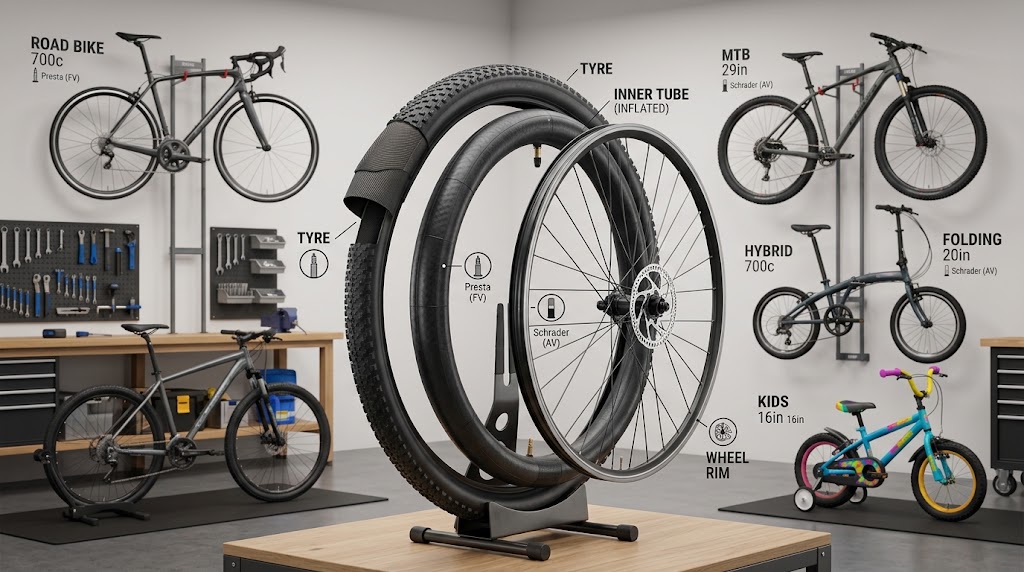
Inner tubes are available for road bikes, mountain bikes, hybrid bikes, folding bikes, children’s bikes and many other types of bicycles. They are not universal, so selecting the correct tube for your wheel is important.
Why Does the Correct Tube Matter?
It might seem that any tube that looks roughly the right size will work, but that is not always the case.
A tube that is too large can fold inside the tyre, creating weak points that may eventually lead to a puncture. A tube that is too small may stretch excessively and become difficult to install safely.
The correct tube should match your tyre’s size and be suitable for its width. Getting this right helps maintain proper tyre pressure, handling and comfort.
Before buying a replacement, check the numbers printed on the sidewall of your tyre. You might see measurements such as 700 x 25C, 700 x 35C, 26 x 2.10 or 27.5 x 2.40. These measurements give you the information needed to find a compatible tube.
Understanding Bike Tube Sizes
Bike tube sizing can look complicated because bicycles use several different measurement systems.
Road bikes commonly use 700c wheels, with tyres ranging from narrow racing sizes to wider commuter options. Mountain bikes may use 26-inch, 27.5-inch or 29-inch wheels. Children’s bikes and some folding bikes use smaller wheel sizes.
The width matters too.
For example, a tube designed for a relatively narrow 700c tyre may also cover a range of widths. You may find packaging labelled something like 700 x 28–35C. This means the tube is designed to work with tyres within that width range.
The safest approach is to compare the tube’s stated size range with the markings on your tyre before purchasing.
Presta or Schrader: Which Valve Do You Need?
One of the most important differences between inner tubes is the valve.
Presta Valves
Presta valves are narrow and are commonly found on road bikes, performance bikes and many modern hybrid bicycles. They have a small threaded valve at the top that needs to be loosened before inflation.
Their slimmer design makes them particularly suitable for narrow rims and high-pressure tyres.
Schrader Valves
Schrader valves are wider and are similar to the valves used on most cars. They are common on mountain bikes, children’s bikes, hybrids and many everyday bicycles.
They are generally easy to recognise because they have a wider body and use a removable valve cap.
Does Valve Length Matter?
Yes. This is especially important if you have deep-section wheels.
If the valve is too short, you may struggle to attach your pump securely. If you have deep rims, look for a tube with a valve long enough to extend through the rim comfortably.
How Often Should You Replace a Bike Tube?
There is no fixed replacement schedule for inner tubes.
A tube can last for a long time if it is properly inflated and remains in good condition. However, repeated punctures, ageing rubber, stretching or damage around the valve can be reasons to replace it.
If you remove a tube after a puncture and notice several patches, cracks or areas that look worn, replacement may be more sensible than continuing to repair it.
It is also worth checking your spare tube occasionally. Keeping an old tube in your saddle bag for years is not particularly useful if the rubber has deteriorated by the time you need it.
What Causes Inner Tubes to Puncture?
Punctures can happen for several reasons.
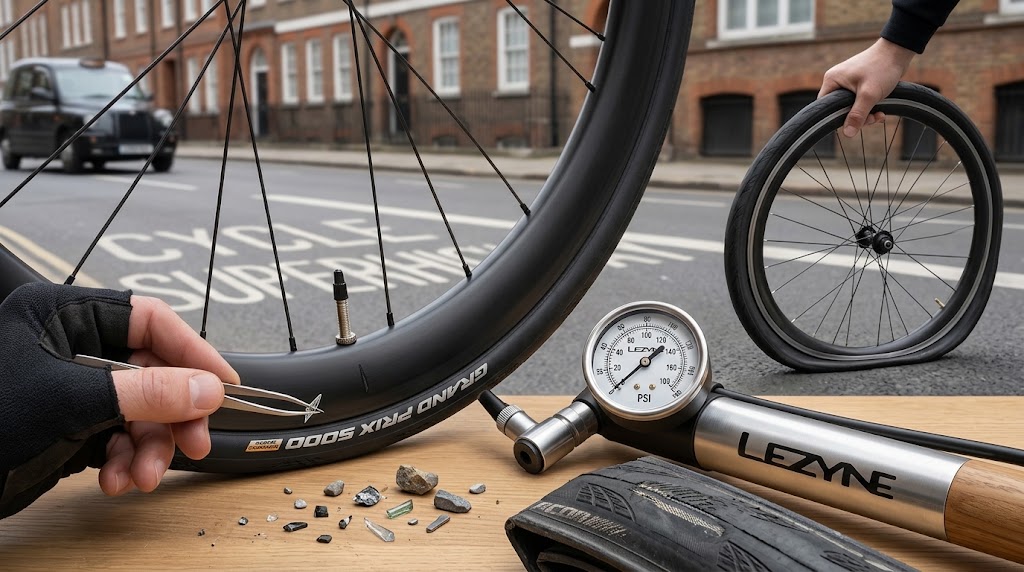
The most obvious is a sharp object such as glass, a thorn, wire or a small piece of metal entering through the tyre. London cyclists may encounter plenty of road debris, particularly around busy streets and construction areas.
However, not every flat tyre is caused by something sharp.
A tube can suffer a pinch flat, sometimes called a snakebite puncture, when it gets trapped between the tyre and rim after hitting a pothole or kerb. This can produce two small holes close together.
Under-inflation can increase the risk because the tyre has less protection against impacts. That is one reason maintaining the correct tyre pressure is so important.
How to Prevent Punctures
You cannot eliminate punctures completely, but you can reduce the chances of getting one.
Start by checking your tyre pressure regularly. Riding with tyres that are significantly under-inflated can make them more vulnerable to impacts.
Inspect your tyres for embedded glass, stones or other sharp objects. Something that has not yet reached the tube can still become a puncture later.
Your tyre condition matters as well. A heavily worn tyre has less rubber protecting the tube, so replacing it when necessary can help prevent future problems.
Using the correct tyre pressure for your weight, tyre and riding conditions can also improve comfort and handling.
Can You Repair a Punctured Tube?
Yes. In many cases, a punctured inner tube can be repaired rather than replaced.
A basic puncture repair kit usually contains patches, adhesive and tools for preparing the damaged area. First, remove the tube and locate the puncture. Once the damaged area is identified, dry and clean the surface before applying the patch according to the instructions.
However, not every tube is worth repairing.
If the valve has been damaged, the rubber is badly cracked or there are multiple significant holes, replacing the tube is usually the better option.
For everyday cyclists, carrying a spare tube is often the quickest solution when a puncture happens away from home.
Why Should You Carry a Spare Tube?
A spare inner tube can be one of the most useful items in a cyclist’s repair kit.
Patching a tube beside a busy London road is possible, but replacing the tube is often quicker. Once you get home, you can inspect the damaged tube and decide whether it is worth repairing.
A compact saddle bag can usually hold a spare tube, tyre levers, a small pump or CO₂ inflator and a basic multi-tool.
It is a simple setup that can make a huge difference when something goes wrong during a commute or weekend ride.
How to Fit a New Inner Tube
Replacing a tube is easier once you have done it a few times.
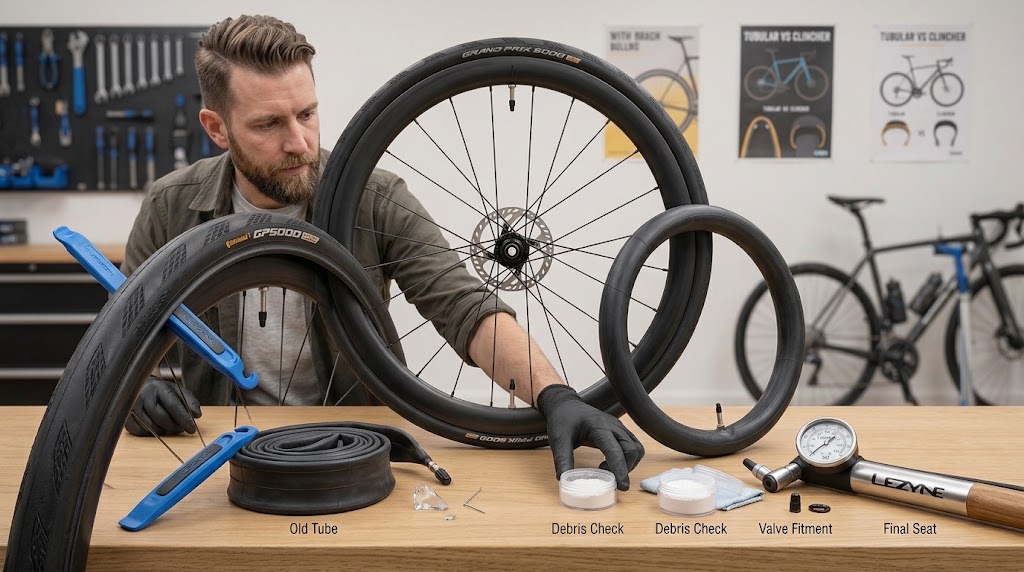
Start by removing the wheel and deflating the old tube completely. Use tyre levers carefully to remove one side of the tyre from the rim.
Remove the old tube and check the inside of the tyre thoroughly. This step is important. If a piece of glass or metal is still stuck inside the tyre, it can puncture your new tube almost immediately.
Lightly inflate the replacement tube so that it takes shape. Place it inside the tyre, making sure the valve sits correctly through the rim.
Work the tyre bead back onto the rim carefully. Avoid trapping the tube between the tyre and rim. Once everything is seated properly, inflate the tyre gradually and check that the bead is sitting evenly around the wheel.
Should You Use Lightweight Tubes?
Some cyclists choose lightweight inner tubes because they can reduce rotating weight.
For performance-focused road cyclists, this can be appealing. However, lightweight tubes may require more care during installation and may not always be the best choice for riders who regularly deal with rough roads.
For commuting and everyday cycling, reliability is often more important than saving a small amount of weight.
Think about where and how you ride before choosing an ultra-light tube.
What About Tubeless Tyres?
Tubeless systems do not use a traditional inner tube. Instead, the tyre and rim form an airtight system, usually with sealant inside.
Tubeless setups can offer advantages for certain types of riding, particularly mountain biking and some modern road or gravel applications. They can reduce the risk of traditional pinch flats and allow riders to use lower pressures in appropriate situations.
However, they require compatible tyres and rims, and setup can be more involved.
For many everyday commuters and casual cyclists, conventional tyres and inner tubes remain a straightforward and practical choice.
Final Thoughts
Inner tubes may be small and inexpensive compared with other bike components, but they play a major role in keeping your bicycle moving safely and comfortably. Choosing the right size and valve, maintaining suitable tyre pressure and checking your tyres regularly can help reduce punctures and extend the life of your equipment.
It is also worth learning how to replace a tube yourself. Even if you normally use a bike shop for repairs, knowing how to deal with a flat gives you much more confidence when you are out riding.
For cyclists who want advice on choosing the right tube, tyre or other essential bike equipment, Camden Cycles can be a useful place to start. Whether you are preparing for your daily London commute or getting your bike ready for a longer weekend ride, having the right equipment can make every journey easier.