
Second Hand Bikes in London: What to Check Before Buying
Buying a second-hand bike in London can be an excellent way to save money while finding a reliable bicycle for commuting, exercise or weekend adventures. With so many different types of bicycles available, from practical hybrid bikes to lightweight road bikes and mountain bikes, there is usually an option to suit every budget and riding style.
However, buying a used bicycle requires more than choosing a model that looks good. A bike may have hidden mechanical problems, worn components or damage that could make it unsafe to ride. Taking the time to inspect it properly can help you avoid unexpected repair costs and make a more informed decision.
Whether you are searching for a bicycle for your daily commute or a bike for exploring London’s parks and cycle routes, here are the essential things to check before purchasing a second-hand bike.
1. Check the Frame for Damage
The frame is one of the most important parts of any bicycle. It supports the rider’s weight and connects the main components, so structural damage should never be ignored.
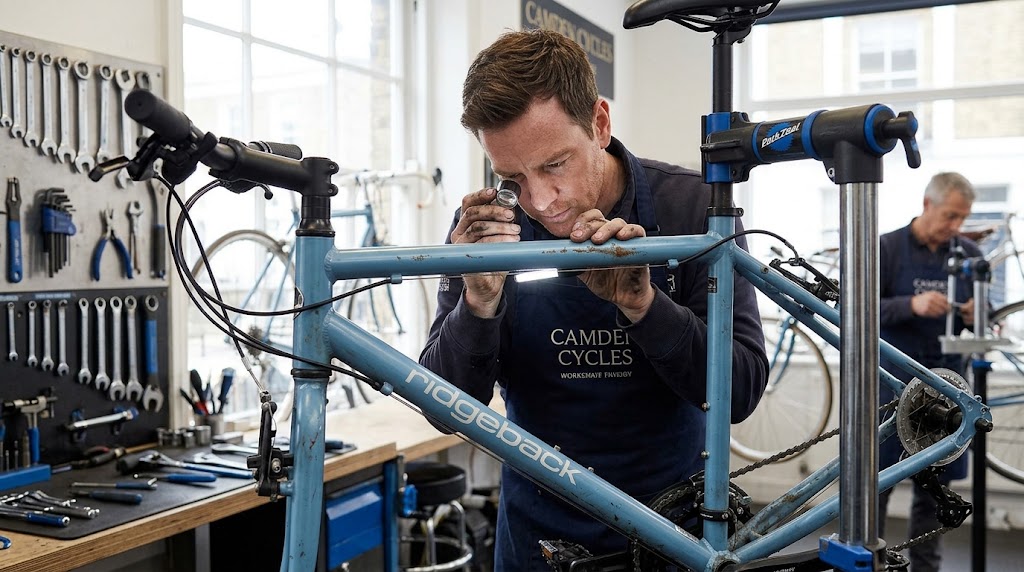
Before buying a used bike, examine the frame carefully in good lighting. Look for cracks, dents, deep scratches, rust and signs of previous repairs. Pay particular attention to the areas around the head tube, bottom bracket, seat tube and rear dropouts, where stress can occur.
Different frame materials require different considerations:
Aluminium: Look for dents, cracks and signs of impact damage.
Steel: Check for rust, particularly around joints and areas where paint has chipped.
Carbon fibre: Look for cracks, crushed areas or unusual marks that could indicate structural damage.
Titanium: Check for visible damage, unusual repairs or problems around frame joints.
Minor cosmetic scratches do not necessarily mean a bicycle is unsafe. However, cracks, significant dents and suspected structural damage require professional assessment.
If you are unsure about the condition of the frame, ask a qualified bicycle mechanic to inspect it before you buy.
2. Inspect the Brakes Carefully
Reliable brakes are essential for riding safely around London. Traffic, pedestrians, junctions and sudden stops are common features of urban cycling, making properly functioning brakes particularly important.
First, identify whether the bicycle uses rim brakes or disc brakes. Both systems can work effectively when maintained correctly, but their components need different checks.
For rim brakes, inspect the brake pads for wear and make sure they contact the wheel’s braking surface correctly. Check that the brake levers feel firm and that the wheels stop when the brakes are applied.
For disc brakes, examine the rotors for excessive wear, damage or contamination. Check the pads and make sure the brakes do not feel unusually weak or inconsistent.
Also inspect the brake cables and hydraulic hoses for visible damage or leaks.
During a safe test ride, apply each brake separately at low speed. The bicycle should slow down predictably without excessive lever movement, grinding noises or unexpected pulling.
Never assume that brakes are safe simply because they appear clean. If their performance is questionable, arrange a professional inspection before riding in traffic.
3. Check the Tyres and Wheels
London’s roads can contain potholes, broken glass, debris and uneven surfaces. Worn tyres or damaged wheels can increase the risk of punctures and make a bicycle less comfortable to ride.
Start by examining both tyres. Look for cracks, cuts, exposed threads, bulges and heavily worn tread. Although not every bicycle tyre needs deep tread, visible damage and deteriorating rubber are warning signs.
Check the tyre sidewalls for the correct size and inspect the wheels for bent rims or damaged spokes.
Spin each wheel and watch it rotate. It should turn relatively smoothly without obvious side-to-side movement or rubbing against the brake pads or frame.
Next, lift each end of the bicycle slightly and spin the wheel to listen for unusual noises. Gently check for excessive sideways movement around the wheel hub.
Ask the seller when the tyres were last replaced and whether the wheels have required recent repairs. Remember that new tyres may be needed even when the rest of the bicycle is in excellent condition.
4. Test the Gears and Drivetrain
A bicycle’s gears allow you to adapt to different speeds and gradients. They are especially useful in London, where your journey might include flat roads, bridges and occasional hills.
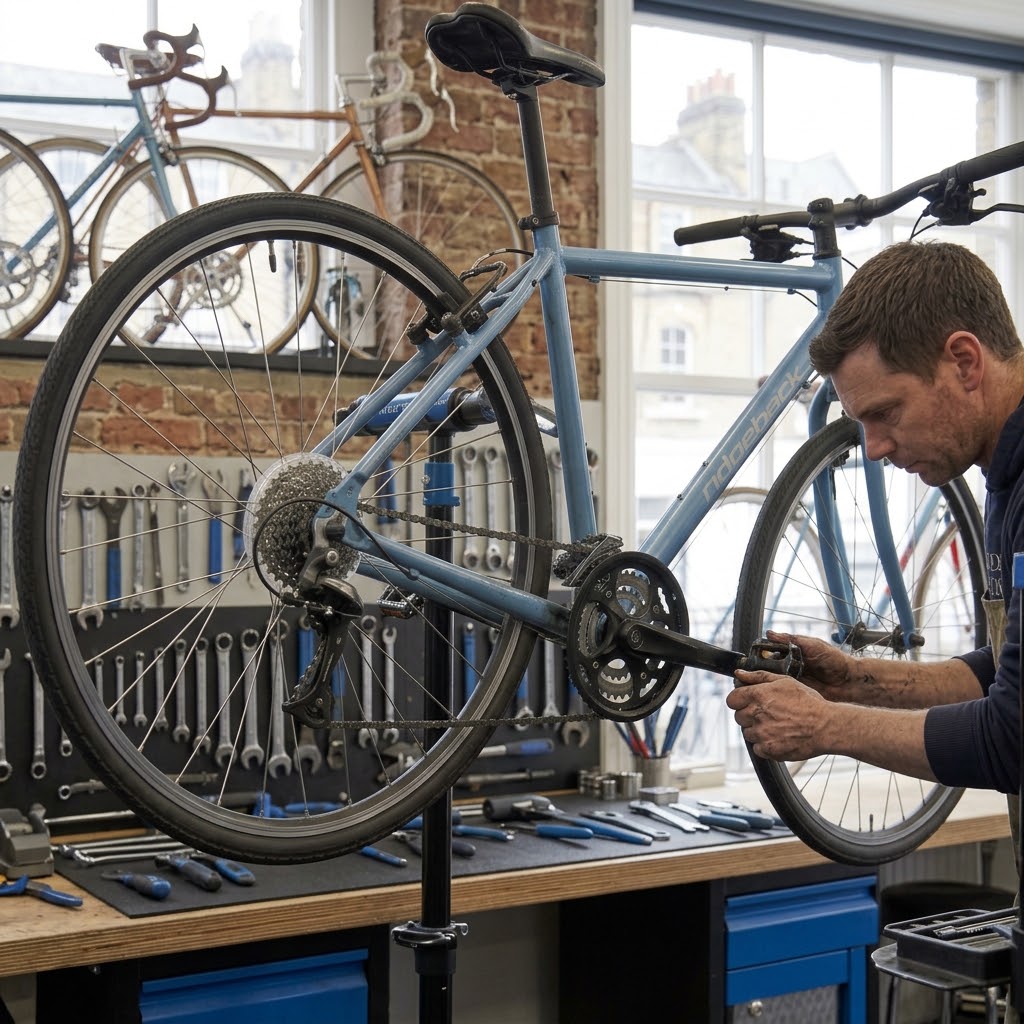
Before purchasing a second-hand bike, inspect the chain, cassette or freewheel, chainrings and derailleurs where fitted.
A rusty chain, excessively worn sprocket teeth or damaged gear components may indicate poor maintenance. The chain should not have stiff links, and the drivetrain should not make excessive grinding or clicking noises.
During your test ride, shift through the available gears gradually. The chain should move between sprockets smoothly without skipping or repeatedly falling off.
Check that the gear shifters operate properly and that the pedals turn without unusual resistance.
Some minor adjustments may be inexpensive, but a worn chain combined with damaged cassette and chainrings can result in a more costly repair. Ask the seller whether the drivetrain has been serviced recently.
5. Make Sure the Bike Fits You
Even a mechanically sound bicycle can become uncomfortable if it is the wrong size. An unsuitable frame may cause back discomfort, shoulder strain, knee pain or difficulty controlling the bike.
Check the frame size against your height and leg length. Manufacturers use different sizing systems, so do not rely on the frame label alone.
When seated on the bicycle, you should be able to reach the handlebars comfortably without stretching excessively. Your knees should remain slightly bent at the bottom of the pedal stroke when the saddle is adjusted appropriately.
For city commuting, consider the riding position as well. A more upright hybrid bicycle may suit someone who prioritises visibility and comfort, while a road bike may appeal to riders who prefer a faster, more forward-leaning position.
If you plan to carry shopping or a work bag, consider whether the bicycle can accommodate a suitable rack or panniers.
Whenever possible, take a short test ride before making your decision.
6. Inspect the Saddle, Handlebars and Pedals
These components are easy to overlook when concentrating on the frame and gears, but they affect comfort and control.
Check the saddle for torn covering, damaged rails or excessive movement. Make sure the seatpost can be adjusted and secured firmly at the correct height.
Inspect the handlebars and stem for cracks, corrosion or loose fittings. Hold the front brake and gently rock the bicycle forwards and backwards to check for unusual movement around the headset.
Examine both pedals for cracks, excessive play or damaged threads. Turn them by hand to check whether they rotate smoothly.
Pay attention to the grips or handlebar tape. Worn grips are relatively easy to replace, but damaged handlebars or a loose stem require more careful attention.
A few inexpensive replacement parts may be perfectly reasonable when buying a used bicycle. The important thing is to identify them beforehand and include their cost in your budget.
7. Check for Rust and Signs of Poor Maintenance
A bicycle does not need to look brand new to be a good purchase. However, its overall condition can reveal how carefully it has been maintained.
Look for rust on the chain, bolts, brake components and other exposed metal parts. Surface rust may be manageable, but severe corrosion can weaken components and make repairs more difficult.
Check whether the chain appears lubricated, whether the tyres are inflated and whether the brakes and gears have been maintained.
Also examine the bicycle for mismatched components, loose fittings or improvised repairs. These are not automatically signs of a bad purchase, but they are reasons to ask additional questions.
London’s wet weather can accelerate corrosion when a bicycle is regularly left outside without proper care. Ask where the bike has been stored and how frequently it has been cleaned or serviced.
A well-maintained bicycle with minor cosmetic marks may be a better choice than a newer-looking model with neglected mechanical components.
8. Confirm the Bike’s History and Ownership
Before paying for a second-hand bicycle, make sure the seller has a legitimate right to sell it.
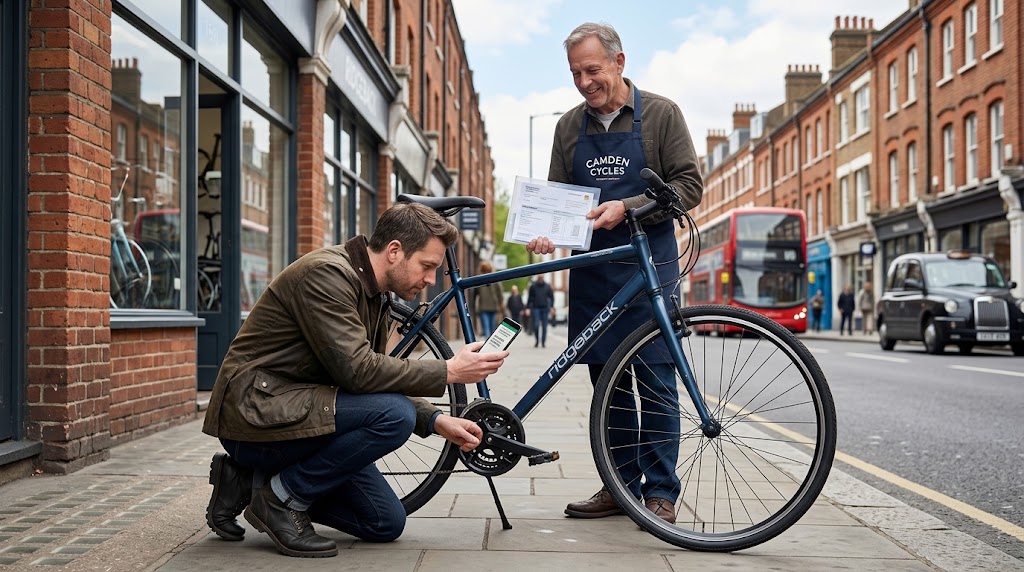
Ask for any available purchase receipts, service records, original documentation or other evidence of ownership. If the seller has owned the bike for several years, they may be able to explain when it was purchased and which components have been replaced.
Check the frame number and consider using a reputable bicycle registration or stolen-bike checking service. A registration check can help identify potential concerns, although it cannot guarantee that a bicycle has never been stolen.
Be cautious if the seller refuses to answer reasonable questions, will not allow a proper inspection or pressures you to complete the transaction immediately.
If the price seems unusually low compared with similar bicycles, investigate why before proceeding.
For private sales, arrange to meet in a safe, sensible location and keep a record of the transaction. If anything about the bicycle’s ownership appears suspicious, walk away.
9. Compare the Price with Potential Repair Costs
A low asking price does not always mean a bicycle offers good value. Before agreeing to buy, compare the price with similar models in comparable condition.
Research the bicycle’s original specifications, frame material, age and component quality where this information is available. Then consider the cost of any repairs or replacements identified during your inspection.
For example, a used bicycle may need new tyres, brake pads, a chain and a general service shortly after purchase. Adding these expenses together can help you determine whether the overall cost remains reasonable.
It is also worth checking whether the bicycle comes with useful accessories such as mudguards, lights, a kickstand or a luggage rack. These can reduce the amount you need to spend afterwards.
Set a maximum budget before shopping and leave some money aside for essential maintenance. A slightly more expensive bicycle in better condition may offer greater value over time.
10. Take a Safe Test Ride Before Buying
A test ride brings all your checks together and helps reveal problems that may not be obvious when the bicycle is stationary.
Find a safe, quiet area where you can ride without putting yourself or other road users at risk. Check the brakes at low speed, change gears, pedal steadily and listen for unusual noises.
Notice whether the bicycle tracks straight, feels stable and responds predictably when you steer. Check for excessive vibration, rubbing wheels, slipping gears or movement around the handlebars and saddle.
Avoid taking an unfamiliar bicycle directly into busy London traffic before confirming that it works properly.
If the seller will not allow a reasonable test ride, ask whether a mechanic can inspect it instead. Do not feel pressured into purchasing a bicycle you have not been able to assess adequately.
Final Thoughts
Buying a second-hand bike in London can be a practical and affordable way to enjoy cycling, provided you take the time to check its condition, fit, safety and ownership history. Inspect the frame, brakes, tyres and drivetrain carefully, take a safe test ride and consider potential repair costs before making your final decision. A little research can help you avoid expensive surprises and find a bicycle that suits your everyday journeys. Whether you are looking for a commuter bike, a comfortable hybrid or a bicycle for weekend rides, Camden Cycles can help you explore your cycling options and make a more informed choice.